

- Explosive Growth in Vulnerability Exploitation
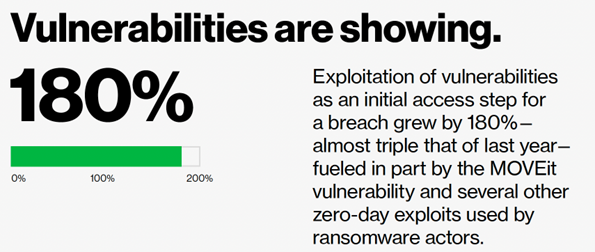
The report reveals a staggering 180% increase in attacks exploiting vulnerabilities, particularly driven by ransomware and extortion actors targeting web applications.
Key Insight: Exploitation of vulnerabilities as an initial access step for breaches has grown significantly, making it imperative for organizations to adopt a proactive vulnerability management strategy. This involves regular scanning, timely patching, and continuous monitoring for new vulnerabilities.
- Ransomware and Extortion: Persistent Threats
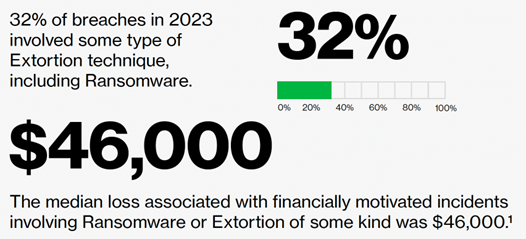
Ransomware remains a dominant threat, involved in 32% of breaches. While traditional ransomware incidents have slightly declined, pure extortion attacks are on the rise. The median financial loss from ransomware and extortion attacks stands at $46,000, a significant impact on any organization’s bottom line.
Key Insight: Organizations should implement comprehensive backup and recovery plans, conduct regular ransomware simulations, and consider investing in advanced threat detection and response solutions to mitigate the impact of ransomware attacks.
- Human Element and Social Engineering: A Major Weakness
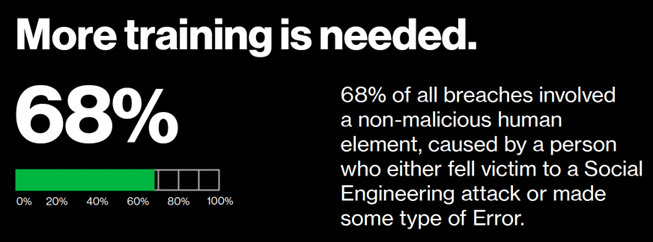
A significant portion of breaches (68%) involved a human element, often due to social engineering attacks like phishing and pretexting. Alarmingly, the median time for users to fall for phishing emails is less than 60 seconds. This highlights the urgent need for continuous security awareness training and robust phishing defenses.
Key Insight: Enhance your organization’s security awareness programs by conducting regular phishing simulations, providing targeted training sessions, and encouraging a culture of vigilance among employees.
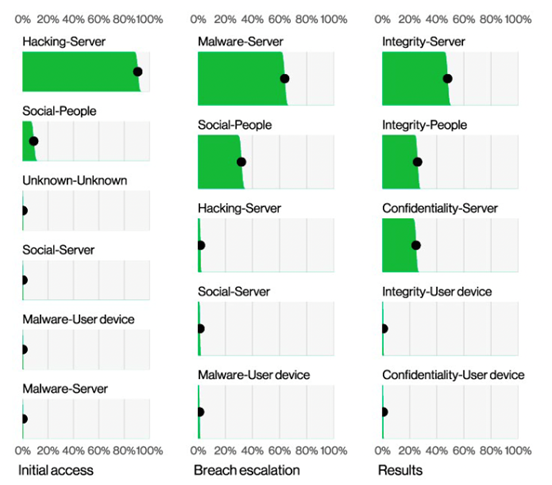
Steps in Social Engineering incidents
- Third-Party Risks and Supply Chain Attacks
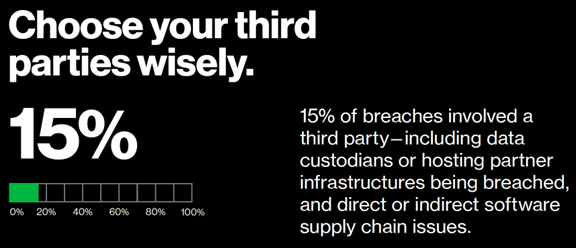
Breaches involving third parties have increased to 15% of all breaches, marking a 68% increase from the previous year. This highlights the growing risk from supply chain vulnerabilities. Organizations must scrutinize their partners’ security practices and ensure their supply chain is resilient against cyber threats.
Key Insight: Develop a comprehensive third-party risk management program that includes regular security assessments of partners, strict contractual obligations for cybersecurity standards, and continuous monitoring of third-party activities.
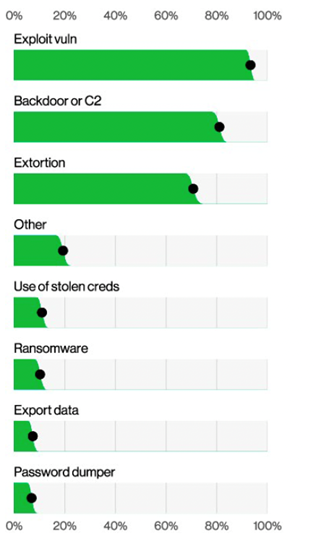
Action varieties in selected supply chain interconnection breaches
- Financial Impact and Business Email Compromise
Business Email Compromise (BEC) incidents continue to be financially damaging, with median losses around $50,000. These sophisticated attacks often involve pretexting, making them challenging to detect and prevent. Implementing strong email security measures and employee training programs is essential to mitigate this threat.
Key Insight: Implement multi-factor authentication (MFA) for all email accounts, use advanced email filtering solutions, and conduct regular training on recognizing and reporting BEC attempts.

- Challenges in Patch Management
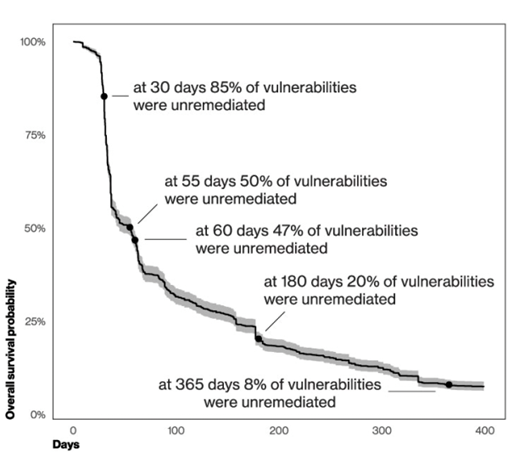
Organizations take an average of 55 days to remediate 50% of critical vulnerabilities after patches are available. This delay presents a significant risk, as threat actors can exploit these vulnerabilities quickly. Improving patch management processes and prioritizing critical vulnerabilities are vital steps to enhance cybersecurity.
Key Insight: Automate patch management processes where possible, prioritize patching based on risk assessments, and ensure all systems and applications are up-to-date with the latest security patches.
Strategic Recommendations
Broader Context:
Understand how the cybersecurity landscape has evolved and consider industry-specific impacts. The DBIR provides detailed analysis of breaches across various industries, including healthcare, finance, and education.
High-Level Strategies:
Implement strategic recommendations for improving cybersecurity posture based on DBIR insights. This could include adopting a zero-trust security model, investing in threat intelligence, and conducting regular security assessments.
Future Outlook:
Stay informed about emerging threats and future predictions to anticipate and mitigate potential risks. The DBIR offers insights into emerging trends like the use of generative AI in cyberattacks.
Conclusion
The Verizon 2024 DBIR offers a comprehensive view of the current cybersecurity landscape, revealing persistent threats and evolving tactics of cybercriminals. For CIOs, CISOs, and CEOs, understanding these trends and implementing robust security measures is crucial to protecting organizational assets and ensuring resilience against cyber threats.
Call to Action
- CIOs: Ensure your IT teams are equipped with the latest tools and training to address these vulnerabilities.
- CISOs: Review and update your security policies and incident response plans based on these findings.
- CEOs: Prioritize cybersecurity investments and foster a culture of security awareness across the organization.
By understanding these key trends and adapting to the shifting threat landscape, your organization can better safeguard its assets and ensure resilience against cyber threats.
The Road Ahead: Fortifying Your Web Application Defenses
In our next blog post, we will delve deeper into the specific challenges of web application security, exploring the impact of delayed vulnerability remediation and providing actionable strategies for fortifying your defenses. We will discuss the importance of a multi-layered approach to security, including vulnerability scanning, patch management, access controls, web application firewalls, and security awareness training. Stay tuned for a comprehensive guide to protecting your web applications from the ever-evolving threat landscape.