
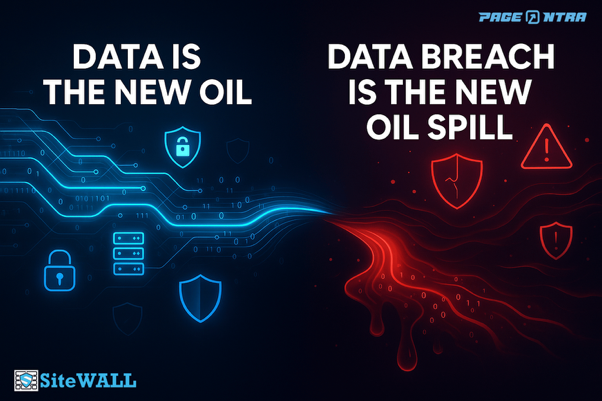
Data Is the New Oil. Data Breach Is the New Oil Spill
Why Web Application Security Defines Business Resilience in 2025
In a world where web breaches are the new oil spills, digital resilience has become the refinery of trust. In today’s digital revolution, data is the new oil—fueling economies, decisions, and confidence. The data flows through web applications — the operational pipelines of modern enterprises — making them prime targets for threat actors, much like oil itself.
Business ecosystems in 2025 face growing risks from breaches targeting the web applications — the next generation of oil spills. The major concern in every boardroom is safeguarding these digital crown jewels. This is where SiteWALL WAF steps in — safeguarding and preserving the integrity of web applications, while ensuring the continuity and availability of an organization’s digital assets.
People and Data: The Two Pillars of Business Value
Every organization runs on two critical assets — people and data. People interpret, act upon, and derive value from data. But data does not live in isolation. It is accessed, processed, and exchanged through web applications.
These web applications are not mere interfaces; they are the backbone of modern business. Web Applications power digital transactions, customer experiences, analytics, and communication. Web Applications connect employees, customers, and partners—effectively becoming the digital arteries that sustain the organization.
Web Applications: The Digital Crown Jewels
Earlier, companies guarded their vaults and factory floors. Today, their web applications have become the new vaults — the crown jewels that uphold business continuity, customer trust, and competitive advantage.
When a web application is compromised, it’s not just an IT issue — it’s a full-scale business crisis. The shockwaves reach every part of the organization:
- Operations come to a standstill.
- Customers lose trust and confidence.
- Regulators start asking questions.
- Reputation and revenue is impacted.
“A breach is not an IT failure—it is a business impact challenging resilience.”
Breaches: The Modern Oil Spill
The comparison is not poetic—it is painfully real. Like oil, data fuels growth and drives revenue, but when it leaks, it spreads quickly and contaminates everything it touches, damaging an organisation’s reputation and revenue. An oil spill devastates ecosystems and erodes trust, a web breach does the same to business environment—exposing customer data, trade secrets, and intellectual property. Both can be prevented. Both are costly and both cause damage that takes years to recover from.
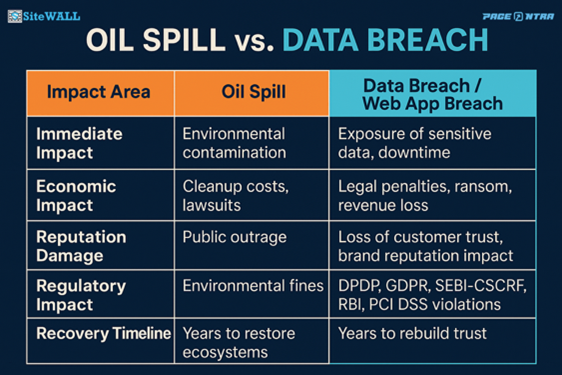
Parallels between oil spills and web breaches.
According to IBM’s Cost of Data Breach Report 2025, the average cost of a data breach has increased to $4.44 million globally. In the U.S., the cost has more than doubled to $10.22 million, while India’s average is $2.62 million, so the financial impact of cyber incidents is increasing worldwide.
The 2025 Verizon Data Breach Investigations Report (DBIR) goes deeper into how these breaches are perpetrated. Nearly three out of every four incidents (74%) fall into just three categories: System Intrusion, Social Engineering, and Basic Web Application Attacks. Even more concerning, 88% of all web application related attacks utilized stolen credentials, further evidence that identity theft remains the gateway to more successful attacks.
Even more concerning, vulnerability exploitation alone has risen in incidents by 34% and is now responsible for one in five initial compromises as a result of all of these vulnerabilities of unpatched edge devices and third-party systems that have become easy targets for attackers. A reminder of this occurred in February 2025, Angel One experienced a breach of its AWS system in India that put client data (up to 8 million records at risk) in jeopardy, leading to immediate credential resets and a forensic review—but there were no service interruptions or losses of funds, underscoring potent vulnerabilities in web applications, even in regulated banking or securities environments by RBI/SEBI.
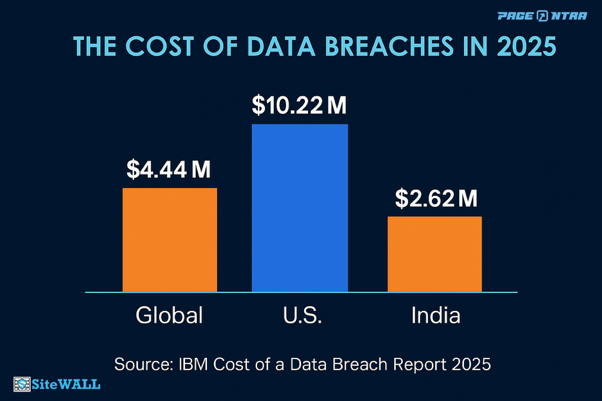
Increasing costs of breaches in 2025
The financial sector in India is regulated by the Reserve Bank of India’s cybersecurity guidelines, which mandate strict controls such as regular assessments, multi-factor authentication, and other core security measures. RBI’s Cybersecurity guidelines have helped contain breach costs to around $2.5–3 million, even amid a 34% rise in vulnerabilities. However, unpatched edge devices and third-party exposures remain cracks in the digital pipeline, often widening the true cost of a breach. SiteWALL WAF closes these gaps through real-time protection and virtual patching, preventing the entire spill before it starts.
From Reaction to Resilience: The CXO Imperative
The oil industry learned long ago that prevention is far cheaper than cleanup. Today, cybersecurity is reaching the same realization.
For CXOs, protecting web applications is no longer just a matter of IT hygiene — it is about ensuring availability, compliance, and credibility. Every leader now owns a piece of the digital risk equation:
- CIOs drive resilience across the digital backbone.
- CISOs uphold governance and regulatory alignment.
- CEOs safeguard brand trust and customer confidence.
In this environment, security is not a cost — it is a competitive advantage.
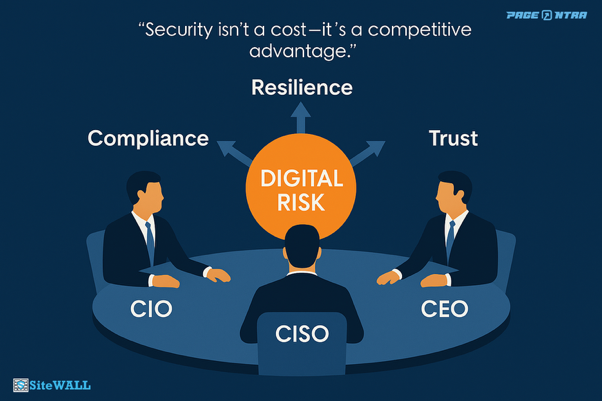
The real question for every CXO is this:
“Are you treating web application security as an expense — or as a strategic differentiator?”
Board Risk Lens:
In 2025, with DPDP audits looming, data protection is no longer an IT metric—it’s a governance KPI. Investors, regulators, and customers now judge resilience as a measure of leadership credibility.
SiteWALL WAF: The Tenacious Secure Gateway
At PageNTRA Infosec, our mission is clear:
To be the Tenacious Secure Gateway to the Internet for Web Applications and Apps in the ever-evolving threat landscape.
SiteWALL WAF was built on that foundation—to protect what truly matters.
- Real-Time Application Protection
SiteWALL proactively monitors and filters all web traffic in real time — blocking malicious traffic such as SQL injections, cross-site scripting, credential abuse, web shells, and vulnerability exploit attempts before they ever reach the applications.
- AI/ML-Powered Threat Intelligence
Powered by AI/ML engine, SiteWALL learns from every attack pattern. As attackers evolve, SiteWALL evolves faster, delivering proactive protection instead of reactive approach.
- CXO Visibility & Decision Support
SiteWALL’s Visibility, Security and TOP 10 executive dashboards turn complex security data into clear, actionable insights and intelligence. CXOs can instantly see where risks exist, what is being blocked, and how SiteWALL protects proactively—enabling informed, data-driven decisions for the boardroom.
- Compliance & Governance Alignment
SiteWALL helps organizations stay audit-ready by aligning with ISO 27001, DPDP, PCI DSS, RBI, and SEBI-CSCRF standards. It provides unified reporting for compliance and detailed 180 days log stored that make audits and governance effortless.
- Always-On Resilience
Even under DDoS attacks or heavy traffic spikes, SiteWALL ensures applications available, responsive, and trusted. SiteWALL ensures uninterrupted business continuity—even when digital front line – web applications are under targeted attacks.
From Oil Pipelines to Data Pipelines
Oil pipelines once defined industrial progress. Today, web applications define digital progress and business expansion.
Just as oil companies built safety systems to prevent environmental disasters, digital enterprises must invest in application firewalls, continuous monitoring, and secure gateways to prevent data spills.
SiteWALL is not just security — it is digital resilience, engineered for the modern enterprise.
Ready to Prevent Your Next Digital Oil Spill?
Oil built industries. Data builds digital economies. Both are powerful, valuable—and dangerous when left unprotected.
A single web breach can spill more than data; it can leak trust, reputation, and growth.
SiteWALL WAF keeps your business resilient, compliant, and trusted.
Because in a world where data is the new oil, SiteWALL protects from the new spills.
Secure your web application before the next headline breach — schedule a free SiteWALL demo now at www.sitewall.net.
Join the conversation: What is your organization’s biggest data risk?
Because resilience is not built after a breach—it is architected before one.
#Cybersecurity #SiteWALL #DPDP #IndiaTech #CISO #Cybersecurity #DataProtection #WebAppSecurity #DPDP #RBI #SiteWALL #DigitalResilience #CISO #CXOLeadership #PageNTRA