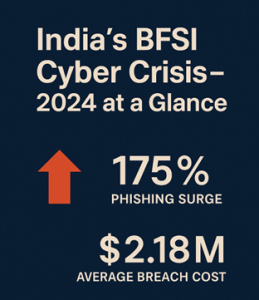
India’s BFSI Cyber Crisis – 2024 at a Glance
The Alarming Reality: BFSI Under Siege
Key Findings (Page 10):
- 175% increase in phishing attacks (H1 2024 vs. H1 2023)
- $2.18 million – average cost of a data breach (10% increase YoY)
- 8 days – average time to exploit a known vulnerability
- 54% of BEC attacks use pretexting
India’s BFSI sector is under siege and faces relentless, persistent adversaries.
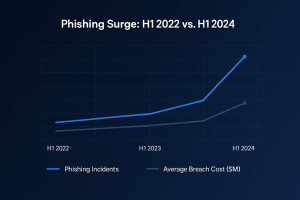
Phishing Surge: H1 2022 vs. H1 2024
A New Era of Cyber Threats: AI, APIs & Insider Risks
Emerging Threats (Pages 6–7, 11–13, 22):
- AI Phishing & Deepfakes: Tools like FraudGPT simulate CEO emails, bypassing filters
- Credential Theft & MFA Bypass: Bots hijack tokens and bypass MFA defenses
- Cloud & API Exploits: Misconfigurations widen the attack surface
- Insider Threats: Privileged access misuse tripled in 2024
These are no longer isolated attacks — they are systemic, intelligent, and accelerating.
Website Cloning: The Invisible Threat in Phishing Attacks
While the report highlights a 175% surge in phishing attacks, an often-underestimated technique powering this rise is website cloning. Threat actors are increasingly replicating banking portals, login pages, and customer dashboards with near-perfect visual fidelity. These lookalike websites, often hosted on legitimate services, trick users into entering sensitive information such as credentials or OTPs.
With the emergence of AI-generated emails and deepfake videos, these cloned sites are now part of multi-stage phishing attacks that combine social engineering with technical deception.
Proactive protection with Next-Gen WAFs, URL filtering, and real-time phishing detection is critical to defend against these invisible clones.
Web & API Security: BFSI’s Weakest Entry Points
Real-World Breaches (Pages 15–24):
API Threats
- Reward Heist (Page 16): API replay attack inflated cashback from ₹4,000 to ₹40 lakh
- Wallet Exploit (Page 18): Logic flaw allowed unpaid orders
Web Application Weaknesses
- Webshell Breach (Page 21): XSS vulnerability exposed AWS S3 buckets
- Cashback Manipulation (Page 19): MITM attack stole cashback via weak encryption
Key Takeaway: Missing input validation, broken logic, and weak or missing WAF policies led to financial and reputational losses.
Note – WAF implementation in India remains inconsistent, with many applications left unprotected or only monitored for threats. The report notes inadequate testing of URI paths and detection-only configurations that leave gaps in active defenses. (Page 30)
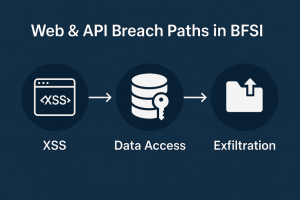
Exploit flow: XSS ➝ Data Access ➝ Exfiltration
Inside the Breach: A Supply Chain Wake-Up Call
Case Study (Page 18): A core banking technology vendor’s misstep enabled RansomEXX ransomware to compromise systems, erase backups, and trigger a double-extortion demand.
Lesson: Your vendors are part of your attack surface. Audits, redundancy, and incident playbooks are non-negotiable.
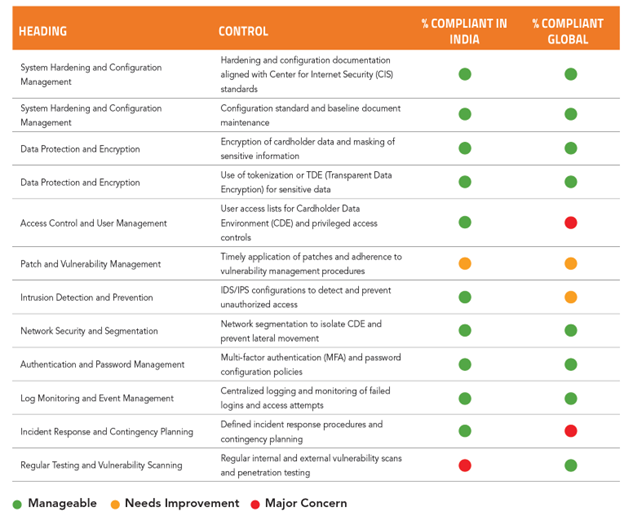
India vs. Global: BFSI Security Gaps (Based on Page 29)
The report evaluates India’s BFSI cybersecurity maturity using qualitative indicators:
Control Area | India | Global |
Patch & Vulnerability Mgmt | 🟠 Needs Improvement | 🟢 Manageable |
Data Encryption | 🔴 Major Concern | 🟠 Needs Improvement |
Regular Pen Testing | 🔴 Major Concern | 🟢 Manageable |
Secure API Management | 🔴 Major Concern | 🟠 Needs Improvement |
MFA & Password Policies | 🟠 Needs Improvement | 🟢 Manageable |
🟢 Manageable 🟠 Needs Improvement 🔴 Major Concern