Fueling the Digital Age: Why Data Centers Are India’s New Powerhouses

Written by

Published On

Fueling the Digital Age: Why Data Centers Are India’s New Powerhouses

Fueling the Digital Age: Why Data Centers Are India’s New Powerhouses

“Data is the new oil.” Once a remark, it’s now India’s digital war cry. Data centers have evolved from silent servers into strategic powerhouses, fueling AI innovation, fintech leaps, and national platforms like UPI and Aadhaar. As India pursues sovereignty and an AI-first future, these facilities anchor its tech-driven ascent.

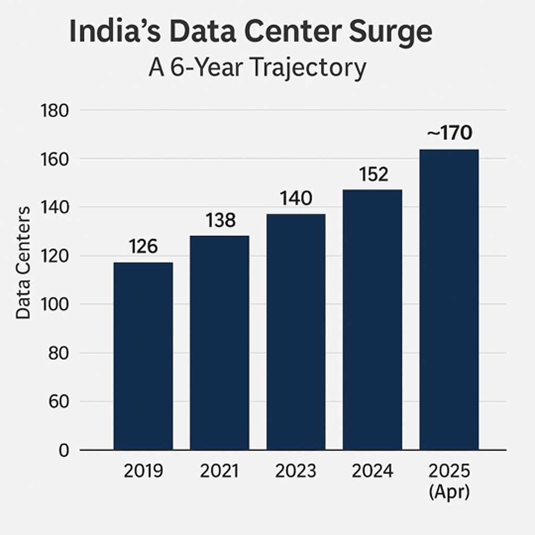
India’s Data Center Surge: A 6-Year Trajectory

India’s rise as a data hub is accelerating:

India’s Data Center Surge
  • Net Growth: 44 centers in six years
  • Global Lens: India’s 170 outpaces Singapore’s 99 but trails the US’s 5,381 (Visual Capitalist, 2024).


Why It Matters: This surge powers India’s quest for data sovereignty, AI readiness, and digital scale.

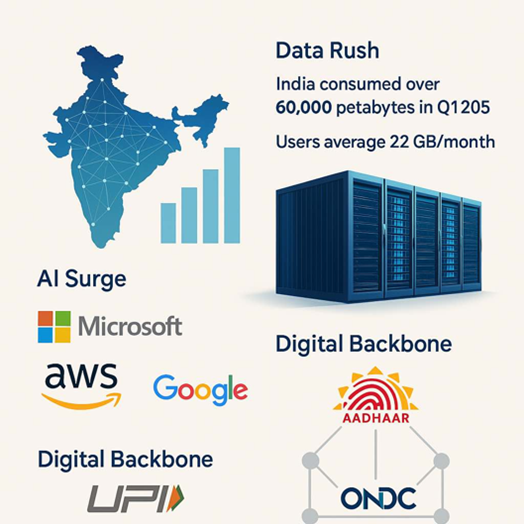
What’s Powering the Boom?

Data Rush
  • India consumed over 60,000 petabytes in Q1 2025 (TRAI).
  • Average usage: 22 GB/month, up from 5 GB in 2018.
AI Surge

Player

Investment

Details

Microsoft

$3B

200 MW by 2026

AWS

$12.7B

Long-term scale

Google

$10B

Cloud expansion

  • JLL forecasts 66% capacity growth by 2026.
  • AI could spike energy demand 165% by 2030 (Goldman Sachs).
Digital Backbone
  • UPI logs 1.6 billion transactions monthly.
  • ONDC aims for 10 million orders by 2025.
  • Aadhaar anchors national digital identity.


DPI is India’s digital glue and data centers keep it sticking.

Government Push: Policy and Localization
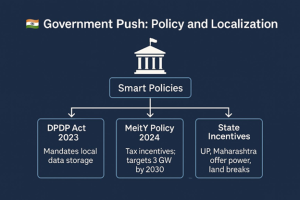
Policy and Localization


Initiative

Description

DPDP Act 2023

Enforced March 2025; mandates local storage

MeitY Policy 2024

Tax incentives; targets 3 GW by 2030

AI Mission

Ties innovation to regulated data access

State Incentives

Power and land breaks in UP, Maharashtra


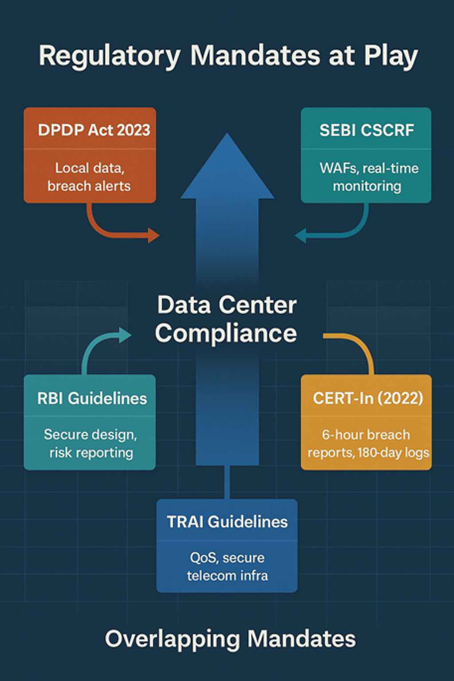
Regulatory Mandates at Play

Regulatory Mandates at Play

Framework

Core Requirement

DPDP Act 2023

Local data, breach alerts

SEBI CSCRF

WAFs, real-time monitoring

RBI Guidelines

Secure design, risk reporting

CERT-In 2022

6-hour breach reports, 180-day logs

TRAI Guidelines

QoS, secure telecom infrastructure

Insight: Overlapping mandates demand agility.

Security Challenges of Scale

Insert Image 6: Line graph illustrating the rise in DDoS attacks

  • Threats: DDoS attacks surged 30% in 2024 (Cloudflare)
  • Talent Gap: 1 million cybersecurity roles unfilled (NASSCOM, 2025)
  • Defenses: AI-driven firewalls, API protection, and automation are crucial.


Data Centers: India’s Cybersecurity Stakes

  • In July 2024, a ransomware attack in Hyderabad locked 2 TB of fintech data.


Why Risks Spike:

  • Multi-cloud and remote access widen attack surfaces.
  • DPDP’s local storage increases India’s exposure.
  • Compliance pressure from CERT-In, RBI, SEBI adds complexity.


“Resilience requires a distributed approach to tackle these threats.”

Challenge

Action

Regulation Overlaps

Unified governance, shared intel

Talent Gap

Public-private cybersecurity skilling

Ransomware & DDoS

AI-based detection and response

Physical Threats

Stronger access control


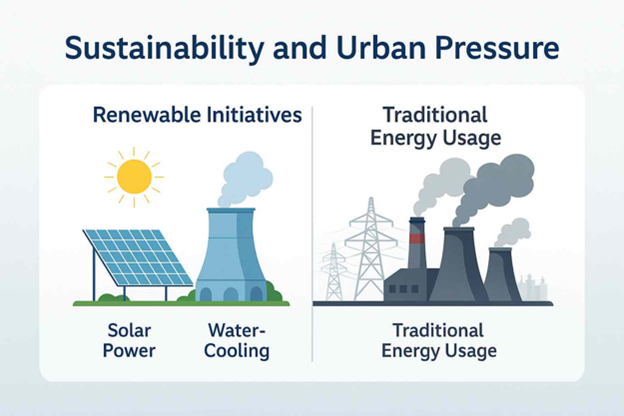
Sustainability and Urban Pressure

Sustainability and Urban Pressure
  • India’s 1 GW data load today could hit 3 GW by 2030 (NASSCOM).
  • Mumbai: 400 MW stresses 2,500 MW grid → 12% more outages (MSEB).
  • Bengaluru: 20% rise in land costs → shift to Tier-2 cities.

Green Initiatives:

  • AdaniConneX: 1 GW solar data center in progress.
  • Water-cooling: Saves 30% energy, but requires policy support.

The Next Frontier
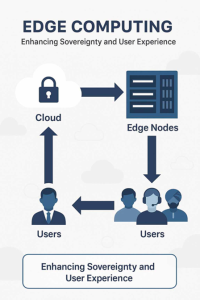
Edge Computing

Focus Area

Highlights

AI-Native

Yotta’s Noida hub powers AI workloads

Sovereign Cloud

AWS MeitY zone to launch in 2026

Edge Growth

Jio’s 10 Tier-2 nodes by 2025

Edge computing extends access and digital sovereignty beyond metros.

Final Thoughts

Futuristic cityscape symbolizing resilience, innovation, and sustainability

From 126 to 170 data centers in six years, India’s building a $50 billion backbone, projected to reach $11.6 billion by 2032 (11% CAGR, Mordor Intelligence).

These aren’t just server rooms—they are pillars of autonomy, resilience, and innovation.

The mission ahead?
Scale smart. Guard tight. Sustain long-term.