
Cybersecurity in India: Driven by Compliance or Real Risk?
India’s digital economy is headed for massive growth by 2025, which will put cybersecurity front and center on the business agenda—not just as a compliance checklist item. Corporations now face a choice: continue ticking off compliance checkboxes, or shift toward a proactive, risk-based cybersecurity approach. While India is in the process of strengthening its cybersecurity regulations, staying ahead of the increasingly sophisticated threats directed against organizations—especially regarding web applications and APIs—will necessitate thinking beyond the compliance checklist.
The table below outlines India’s primary regulatory mandates shaping enterprise cybersecurity
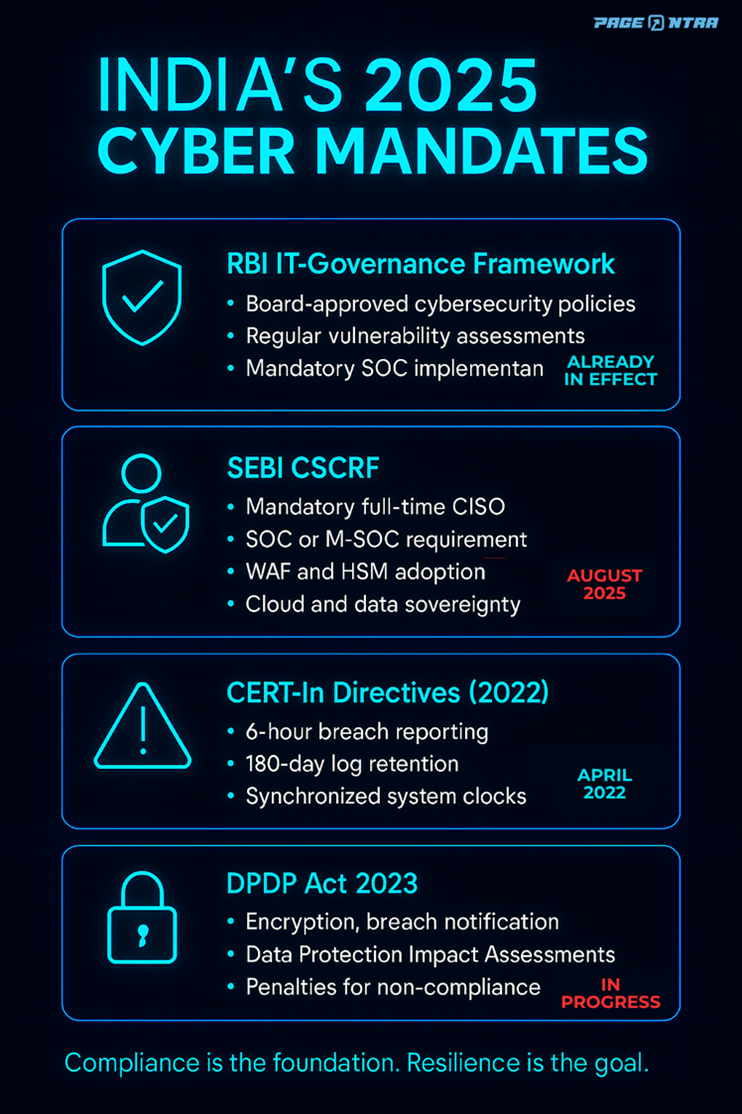
Figure 1 – India’s 2025 Cyber Mandates
The Compliance Backbone: Mandates Shaping India’s Cybersecurity
India’s Cybersecurity regulatory environment is becoming increasingly evident, especially in Banking, Financial Services and Insurance (BFSI).
- CERT-In Directives (2022): Require you to report incidents within Six Hours, maintain the 180-day log, and ensure your systems clocks are synchronized to support forensics investigations – (SiteWALL CertIN Blog).
- RBI IT Governance Framework: Ensures you have board-approved cybersecurity Policies, must conduct Vulnerability Assessments at least once a year, and ensure enterprise-wide Security Operations Center (SOC) is in place, non-compliant banks can expect heightened regulatory scrutiny. – (SiteWALL India Threat Landscape Blog).
- SEBI CSCRF – Full-time Chief Information Security Officers (CISOs), mandatory implementation of Security Operations Centers (SOCs) or Managed Security Operation Centers (M-SOCs), and Data/Cloud Sovereignty must be planned stages by 30th June 2025 – (SiteWALL 2025 Blog CSCRF; SEBI CSCRF).
- DPDP Act 2023 – Organizations are now mandated as significant data fiduciaries to put full trust in encryption, keep security and breach notifications, and implement Data Protection Impact Assessments (DPIAs). There will be punitive damages for not following the DPDP rules (MeitY, 2023).
While these regulatory mandates establish a sufficiently strong baseline for compliance, relying solely on them will not stop the advanced threats targeting web applications and other attack vectors.

Figure 2 – Key Indian Cybersecurity Regulations
The Growing Threat Landscape: Real Risks Beyond Compliance
India has continued to experience an ever-growing cyber threat landscape, especially to web applications and APIs:
- Phishing – BFSI phishing attacks increased 175% in H1 2024, with AI augmenting campaigns and creating hyper-realistic lures. (SiteWALL Blog Cyber resilience BFSI).
- Ransomware & API Attacks – CERT-In has detected a significant increase in ransomware and API exfiltration attacks targeting cloud and third-party vendors in 2024 (SiteWALL Blog CertIN India Cyber Threats).
- Hacktivism – 2024 saw an incredible rise in web-based attacks over 4,000 politically motivated attacks tracked in 2024 (SiteWALL Blog CertIN India Cyber Threats).
- Low Resilience Preparedness – Only 10% of BFSI organizations in India display mature
- threat detection compared to 20% of Singaporean organizations. (SiteWALL Blog Cyber resilience BFSI).
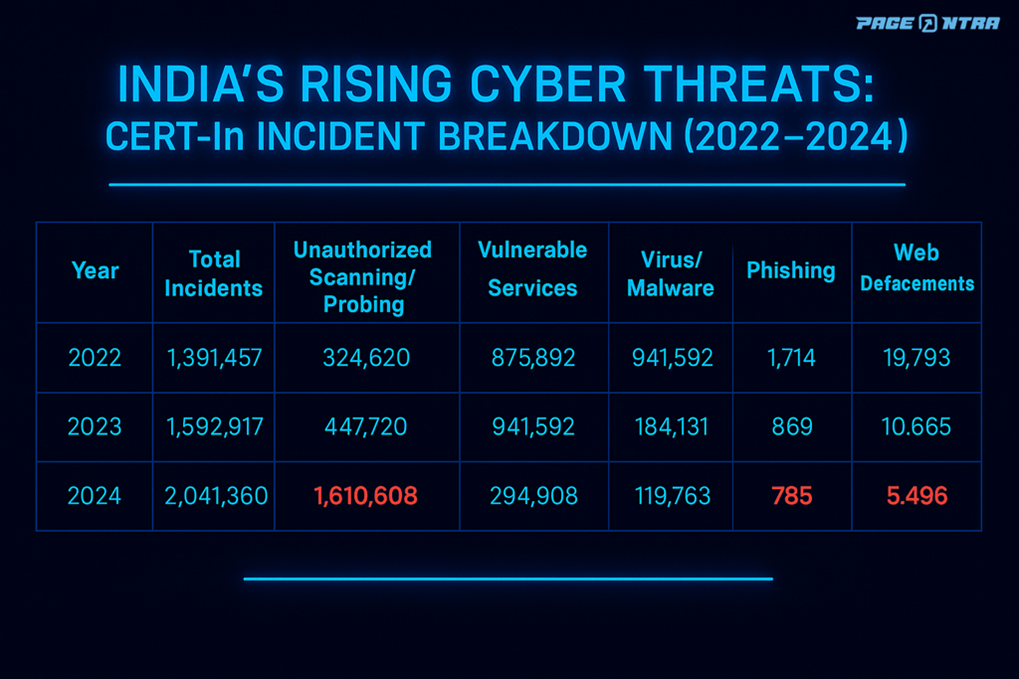
Figure 3 – India’s Rising Cyber Threats
Compliance vs. Resilience: Bridging the Critical Gap
Although compliance improves the potential for successful audits, cyber resilience can stop a breach:
- Static controls:g., Encryption and logs meet regulatory obligations but fail to address advanced threats such as zero-day exploits or multi-stage web-based attacks.
- Auditing limitations: A simple check list does not properly acknowledge threats, e.g., DDoS or credential stuffing perpetrated at the API/Layer.
- Resource Constraints: Small- to mid-sized firms lack resilience because of limited or no resources to implement high cost SOCs, WAFs (SiteWALL SEBI CSCRF).
Building Cybersecurity Resilience: A Risk-Driven Approach
Organizations must first focus on web application resilience to effectively address evolving threats:
- Integrate Threat Intelligence: Feed CERT-In alerts, Threat Intelligence feeds to SIEMs, and use AI WAFs (e.g. SiteWALL) with zero configuration, and API protection.
- Continuous Active SOCs: Beyond alerts, look for anomalies and automatically defend via geo-blocking with context, and adaptive rate limiting – with SiteWALL.
- Simulations and Exercises: Red/blue teaming increases realism.
- Quantifying Risks: Monitor key risk indicators (KRI), e.g. detect latency, dashboard via SiteWALL enables real-time views in corporate risk mitigation decisions.
- Open to Global Standards: ISO 27001 creates good governance and trust from markets.
- Align with Boards: CISOs now report web risk to their CEO’s and Board.
ISO Standards & IPOs: Strategic Compliance
Adoption of ISO 27001 among SaaS and fintech companies enhances their worldwide credibility. Companies planning IPOs are increasingly demonstrating strong cyber posture by employing scalable protections such as SiteWALL ((SiteWALL – India Cyber Threats). Companies planning to go public should consider the high-level governance established by using SiteWALL’s scalable protections to build investor confidence that they can protect the enterprise.
Seize the Opportunity
Embrace the Opportunity: India leads the world in cybersecurity frameworks. To emerge as a cyber-defense leader, it must complement compliance with resilience as a condition of real-time operations.
Actionable Steps
Engage Leadership: You can either ask your board: “Are we audit-ready for web attacks or are we threat-ready?”
- Build Resilience Dashboards: Develop key risk indicators by building a resilience dashboard with SiteWALL’s web threat detection dashboard and
- Invest in Defences: Implement a 90-day Roadmap using a SiteWALL demo that goes beyond web applications by securing your organization’s
- Train & Educate Staff: Train all staff to know what phishing looks like and how to recognize what web attack tactics look like.
- Testing Response Plans: Regular testing to fully simulate a major breach scenario.
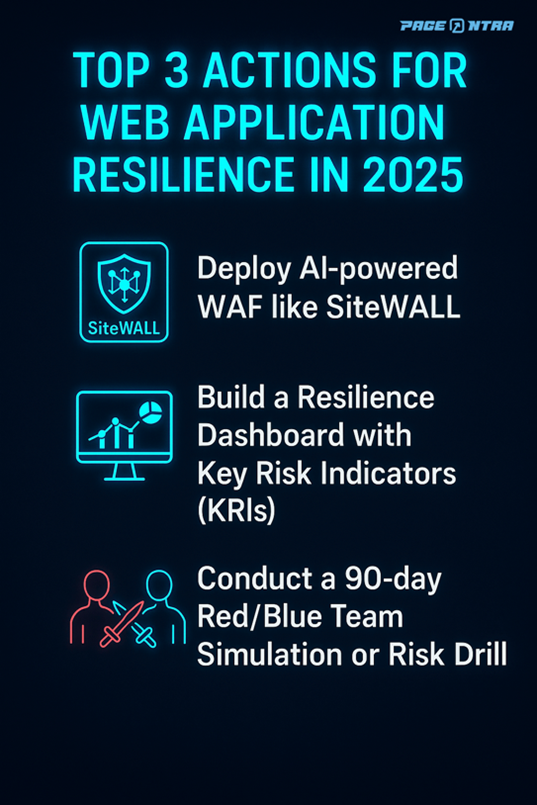
Figure 4 – Top 3 Actions for Web Application Resilience
Let’s Talk
Does your SOC experience alert fatigue due to advanced malicious web attacks such as SQL injection, XSS and API exfiltration? SiteWALL’s AI-based WAF automatically blocks these threats that are happening in real time and makes detailed actionable logs available to your SOC for monitoring.
Book a 30-minute demo at www.sitewall.net/register now to see SiteWALL’s real-time dashboard. How will your board protect web applications and APIs from the explosion of cyber threats in 2025?
Start with SiteWALL to supercharge your SOC and secure the digital future of India today.
Key Sources
- SiteWALL. (2024a). India Cyber Threat Analysis 2022–2024 (CERT-In)
- SiteWALL. (2024b). BFSI Threat Landscape 2024
- SiteWALL. (2025). SEBI CSCRF Circular Guide
- Namasivayam, S. (2025). CSCRF SEBI Cybersecurity (LinkedIn)
- MeitY. (2023). DPDP Act