

Web Applications Under Attack: What 2024 Cybersecurity Statistics Reveal and Why You Need a WAF Now
The Digital Surge, The Security Strain
As organizations embrace digital transformation, web applications and APIs power critical operations. Yet, their 24/7 accessibility makes them prime targets for cyberattacks.
2024 cybersecurity trends show escalating threats to web infrastructure, making a Web Application Firewall (WAF) not just a best practice — but essential for business resilience.
The 2024 Web Application Security Landscape
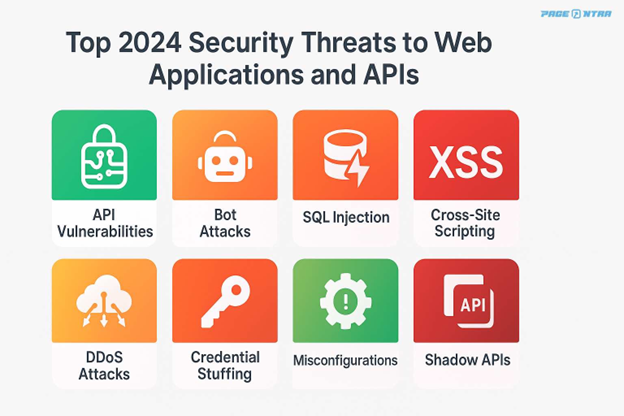
Top 2024 Security Threats to Web Applications and API’s
Below are key statistics from top security reports:
Key Statistic | Source |
98% of web apps are vulnerable to injection and redirection attacks | |
72% of vulnerabilities stem from flawed application code | Terranova Security, 2024 |
26% of breaches involved web applications | |
17% of attacks exploit web app vulnerabilities like SQLi, XSS | PT Security, 2024 |
29% of all web attacks target APIs | |
API traffic accounts for 60% of all traffic | |
25% of API endpoints are undocumented (Shadow APIs) | |
Malicious API traffic surged 681%; 41% of organizations affected | |
33% of web traffic is automated; 93% may be malicious | |
30% of vulnerabilities stem from misconfigurations | |
70% of critical incidents take over 12 hours to resolve | |
Cloudflare mitigated 7% of global traffic; over half blocked by WAFs and bots | |
37.1% of mitigated Layer 7 traffic was DDoS | |
CVEs can be exploited within 22 minutes of disclosure | |
40,077 CVEs were reported in 2024 — a record high | |
Nearly 50% of CVEs were high or critical | SentinelOne, 2024 |
Average breach cost: $4.88M; 292 days to contain | IBM, 2024 |
BFSI sector breach cost: $6.08M | Statista, 2024 |
65% of BFSI firms were hit by ransomware | Statista, 2024 |
CVEs Year on Year (2016–2024)
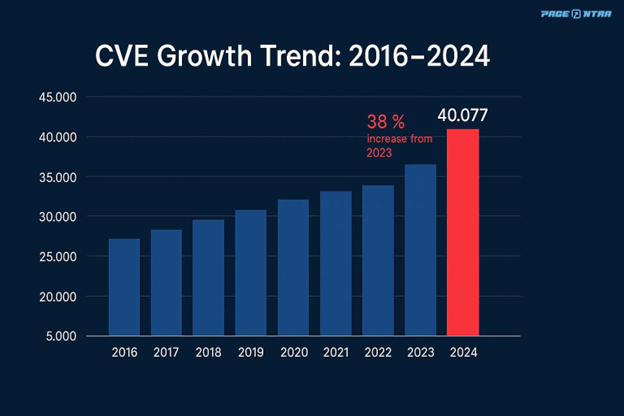
Reported CVEs surged to 40,077 in 2024, a 38% increase from 2023.
Why Web Applications Are Prime Targets
- Always Online: Open to attacks at all hours.
- Complex Architectures: Legacy code, third-party scripts, and fast DevOps pipelines increase exposure.
- Misconfigured & Shadow APIs: Up to 25% of APIs are undocumented and exposed.
- Bot Traffic Risks: 33% of traffic is automated; 93% may be malicious.
- High Stakes in BFSI: Financial firms face high breach costs, strict regulations, and targeted ransomware attacks.
How WAFs Mitigate These Risks
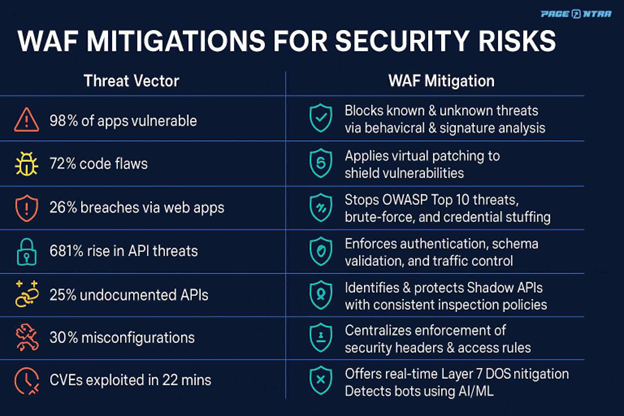
How WAFs block threats like OWASP attacks, bots, and DDoS in real time.
Threat Vector | WAF Mitigation |
98% vulnerable apps | Blocks known & unknown threats with behavioral & signature detection |
72% code flaws | Uses virtual patching to protect apps without code changes |
26% breaches via web apps | Prevents SQLi, XSS, credential stuffing, brute-force attacks |
681% API threat surge | Applies API schema validation, authentication & access control |
Shadow APIs (25%) | Discovers & protects undocumented APIs with centralized rules |
30% misconfigurations | Enforces headers, policies, and access controls |
37.1% DDoS traffic | Provides real-time Layer 7 DDoS protection |
33% bot traffic (93% malicious) | Uses AI/ML to block credential-stuffing bots |
CVEs exploited in 22 minutes | Leverages threat intelligence for real-time defense |
292-day breach lifecycle | Automates response to reduce dwell time and exposure |
WAFs in Action: Bridging DevOps and Security
Modern WAFs:
- Scan for Malware in Real Time with Antimalware Integration: WAFs with antimalware engines inspect file uploads and API payloads, blocking malware like ransomware before it reaches applications, countering the 65% ransomware rate in BFSI AI-driven scanning identifies zero-day threats in the 33% automated traffic, 93% of which may be malicious.
- Detect and Block Malicious Bots Targeting APIs: Integrated antimalware and bot mitigation analyze the 60% API traffic stopping bots that deliver malware or exploit the 681% surge in malicious API traffic, ensuring secure customer interactions.
- Discover Shadow APIs to Prevent Malware Entry: WAFs map 25% undocumented APIs applying antimalware checks to prevent malware injection via hidden endpoints, reducing risks from misconfigurations in fast-paced DevOps cycles.
- Periodically Scan for Vulnerabilities with Automated Assessments: WAFs integrate with vulnerability management tools to run periodic scans, identifying weaknesses in web apps and APIs (e.g., OWASP Top 10, 17% of attacks, streamlining DevSecOps without manual oversight.
- Automate Virtual Patching for Zero-Day CVEs: Using vulnerability scan data, WAFs deploy virtual patches for the 40,077 CVEs reported in 2024 within minutes of detection, blocking exploits that occur in 22 minutes no human intervention needed.
- Mitigate DDoS and Malware-Driven Attacks at Scale: WAFs handle 37.1% of mitigated Layer 7 traffic, combining antimalware and DDoS defenses to protect BFSI apps from outages costing $6.08M per breach, ensuring uptime.
- Ensure Compliance with Centralized Policy Enforcement: Antimalware and vulnerability management integrations enforce PCI DSS and SEBI CSCRF rules, reducing audit burdens for BFSI firms with 65% ransomware exposure, via automated logs and patches.
Proper tuning, automated AI/ML based rule management, and visibility into APIs are key to maximizing WAF effectiveness.
Industry Focus: BFSI Under Fire
$6.08M – Average BFSI breach cost
65% – BFSI firms hit by ransomware
Web apps & APIs – Prime entry points
A WAF secures BFSI platforms with:
- Real-time threat blocking
- API governance
- Compliance support (PCI DSS, SEBI CSCRF, RBI, etc.)
Act Now: Secure Your Web Assets
With 40,077 CVEs, exploits within 22 minutes, and APIs driving 60% of traffic, threats are immediate - act now to stay ahead. A WAF delivers:
- Real-time exploit prevention
- Zero-code virtual patching
- Full visibility into API threats & Shadow APIs
- Bot & DDoS defense powered by AI
- Time for DevOps to fix root vulnerabilities safely
…the time to act is now.
Ready to Protect Your Applications?
Request a Free Consultation Today with SiteWALL
Discover how SiteWALL can secure your web applications, APIs, and customer data in real time.
Register for a free demo – www.sitewall.net/register