

Attackers Don’t Break In Anymore. They Log In.
Web Application Security in the Identity Era
Why credential abuse has become the dominant web application attack — and why traditional defences often fail to detect it.
Picture this.
A security alert fires. A user is logging into your system. The username is correct. The password is correct. Multi-factor authentication passes. From the system’s perspective, everything looks normal.
But the person behind the keyboard is not your employee, customer, or partner. It is an attacker using stolen credentials. This is the reality of modern cyberattacks.
For decades, cybersecurity was built around a simple assumption: attackers try to break in. They exploit vulnerabilities, bypass firewalls, inject malicious code, or brute-force their way through weak defences. Security tools evolved accordingly — Web Application Firewalls (WAFs), intrusion detection systems, and vulnerability scanners designed to block SQL injection, cross-site scripting, and remote code execution.
But the threat landscape has fundamentally changed. Today, many attackers often don’t break in at all. They simply log in — using valid credentials — and when that happens, traditional security controls often detect nothing unusual.
“The most dangerous cyberattack today is not the one that fails authentication.
It is the one that passes it successfully.”
From Exploits to Identity Abuse
Historically, attackers focused on exploiting software vulnerabilities — SQL Injection, Cross-Site Scripting, Remote File Inclusion, Command Injection. All shared the same objective: bypass security controls to gain unauthorized access.
Over the past decade, attackers have recognized something important: breaking in is often harder than logging in.
Massive data breaches have leaked billions of credentials across the internet, widely traded on underground forums and dark-web marketplaces. Why spend time discovering a complex vulnerability when millions of valid credentials already exist? Instead of exploiting applications, attackers increasingly exploit identity itself.
Stolen credentials: initial access vector in 22% of confirmed breaches, and present in 88% of Basic Web Application Attacks. — Verizon DBIR 2025
Credential stuffing: median 19% of daily authentication attempts across SSO logs — rising to 25% in enterprise environments. — Verizon DBIR 2025 supplementary research
94% of all login attempts now originate from bots. Of the remaining human logins, 46% involve credentials already compromised elsewhere. — Cloudflare Threat Report 2026
Identity has become the easiest path into modern systems.
The Login Abuse Model
Modern credential-based attacks follow one of several well-established techniques. Each targets the same gap: the window between authentication and detection.
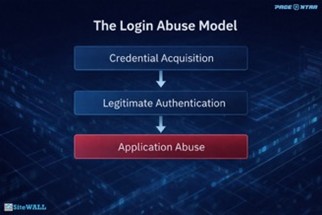
The Login Abuse Model · Three Stages
- Credential Acquisition
Attackers obtain valid credentials through data breaches, phishing campaigns, infostealer malware, password reuse, or dark-web marketplaces. At this stage, they already possess legitimate identity information — before ever touching your system.
- Legitimate Authentication
The attacker logs in. The system registers a valid username, correct password, and a successful session. From a purely technical standpoint, nothing appears wrong. This is the critical blind spot in most security architectures.
- Application Abuse
Once authenticated, attackers abuse the application from the inside — initiating fraudulent transactions, scraping sensitive data, manipulating account settings, abusing APIs, or exploiting business-logic flaws. They operate entirely within the application layer, where many traditional security controls have limited visibility.
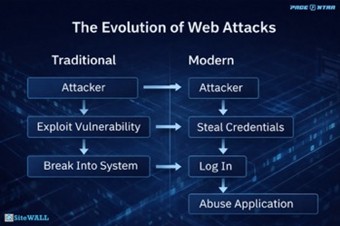
The Evolution of Web Attacks
Traditional: Attacker → Exploit Vulnerability → Break Into System
Modern: Attacker → Steal Credentials → Log In → Abuse Application
The key s: attackers no longer defeat your defences. They operate inside them, using legitimate sessions to abuse the application layer.
How Attackers Get In: The Techniques Behind the Shift
Credential Stuffing
Automated tools test millions of stolen username-password combinations across websites simultaneously. Because password reuse remains widespread — Verizon’s research found that only 49% of user passwords across services are unique — even a 1–2% success rate yields thousands of compromised accounts. These attempts now represent a median 19% of all authentication traffic on major SSO platforms, rising to one in four attempts in enterprise environments.
Account Takeover (ATO)
Once valid credentials are confirmed, attackers assume control of the account — stealing financial data, initiating fraudulent transactions, modifying account information, or using the foothold for further lateral movement.
Session Hijacking & MFA Bypass
Rather than stealing passwords, attackers increasingly capture live session tokens through infostealer malware and phishing kits — bypassing MFA entirely. Malware families such as LummaC2 extract active session tokens directly from infected machines, granting attackers access to already-authenticated sessions without triggering login alerts.
Phishing-as-a-Service kits like Tycoon 2FA industrialized MFA bypass at scale, operating as a transparent reverse proxy that intercepted live authentication tokens in real time. Active from August 2023 until its disruption on March 4, 2026, Tycoon 2FA reached over 500,000 organizations globally each month and accounted for approximately 62% of all phishing attempts blocked by Microsoft at its peak. It took a coordinated operation by Microsoft, Europol, Cloudflare, and law enforcement from six countries to dismantle its infrastructure.
API Credential Abuse
API keys and authentication tokens have become high-value targets. The 2022 Dropbox breach illustrates this clearly: attackers phished developer credentials via a fake CircleCI login page, accessed internal GitHub repositories, and extracted API keys used by developers. No infrastructure vulnerability was exploited. Stolen credentials were the only key required.
When the Attacker Looks Like You
The most dangerous aspect of credential-based attacks is how normal they appear. The username is valid. The password is correct. Authentication succeeds. No vulnerability is exploited. No firewall rule is violated. No known attack signature appears.
The attacker behaves exactly like a legitimate user. The intent is malicious. The activity looks routine.
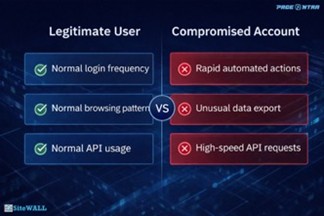
This is why many organizations only discover account compromises after significant damage has already occurred — because there was nothing obviously wrong to detect.
The data confirms the scale of the shift. Darktrace’s 2026 Annual Threat Report found that nearly 70% of incidents in the Americas began with stolen or misused accounts — even as publicly disclosed software vulnerabilities grew 20% year-over-year. Attackers are increasingly choosing identity over exploits, not because exploits have disappeared, but because identity is a faster, quieter path in.
Real-World Incidents Illustrate the Shift
High-profile breaches across industries follow the same pattern.
Uber (2022)
An attacker gained access to Uber’s internal systems using credentials obtained through social engineering. No vulnerability was exploited. The attacker authenticated into the environment and moved laterally across internal systems — undetected until significant damage was done.
Okta Support System (2023)
Attackers accessed Okta’s customer support systems by stealing session tokens, impersonating legitimate users without ever needing a password. The breach propagated to hundreds of downstream organizations — all because a single valid session was hijacked.
Tycoon 2FA (2023–2026)
For nearly three years, Tycoon 2FA enabled criminals worldwide to defeat MFA at scale — available on Telegram from as little as $120 per campaign. At its peak it was responsible for 62% of all phishing attempts blocked by Microsoft, sending over 30 million phishing emails in a single month. It took a coordinated global takedown — seizing 330 domains — to dismantle its infrastructure in March 2026.
Jaguar Land Rover, Marks & Spencer, Salesforce (2025)
Darktrace’s 2026 Annual Threat Report highlights a consistent pattern across high-profile 2025 incidents at Jaguar Land Rover, Marks & Spencer, and Salesforce: in each case, the breach began not with a software exploit, but with compromised identity. Attackers used trusted accounts and existing permissions to operate in plain sight — accelerating impact while evading traditional controls.
Why Traditional Security Has a Blind Spot
Most security architectures were designed for an earlier era. They focus on perimeter defences, vulnerability management, patch cycles, and signature-based detection. These controls remain essential. But they share a critical blind spot.
![{"type":"elementor","siteurl":"https://www.sitewall.net/wp-json/","elements":[{"id":"c869daf","elType":"widget","isInner":false,"isLocked":false,"settings":{"image":{"url":"https://www.sitewall.net/wp-content/plugins/elementor/assets/images/placeholder.png","id":"","size":""},"image_size":"large","image_custom_dimension":{"width":"","height":""},"caption_source":"none","caption":"","link_to":"none","link":{"url":"","is_external":"","nofollow":"","custom_attributes":""},"open_lightbox":"default","align":"","align_tablet":"","align_mobile":"","width":{"unit":"%","size":"","sizes":[]},"width_tablet":{"unit":"%","size":"","sizes":[]},"width_mobile":{"unit":"%","size":"","sizes":[]},"space":{"unit":"%","size":"","sizes":[]},"space_tablet":{"unit":"%","size":"","sizes":[]},"space_mobile":{"unit":"%","size":"","sizes":[]},"height":{"unit":"px","size":"","sizes":[]},"height_tablet":{"unit":"px","size":"","sizes":[]},"height_mobile":{"unit":"px","size":"","sizes":[]},"object-fit":"","object-fit_tablet":"","object-fit_mobile":"","object-position":"center center","object-position_tablet":"","object-position_mobile":"","opacity":{"unit":"px","size":"","sizes":[]},"css_filters_css_filter":"","css_filters_blur":{"unit":"px","size":0,"sizes":[]},"css_filters_brightness":{"unit":"px","size":100,"sizes":[]},"css_filters_contrast":{"unit":"px","size":100,"sizes":[]},"css_filters_saturate":{"unit":"px","size":100,"sizes":[]},"css_filters_hue":{"unit":"px","size":0,"sizes":[]},"opacity_hover":{"unit":"px","size":"","sizes":[]},"css_filters_hover_css_filter":"","css_filters_hover_blur":{"unit":"px","size":0,"sizes":[]},"css_filters_hover_brightness":{"unit":"px","size":100,"sizes":[]},"css_filters_hover_contrast":{"unit":"px","size":100,"sizes":[]},"css_filters_hover_saturate":{"unit":"px","size":100,"sizes":[]},"css_filters_hover_hue":{"unit":"px","size":0,"sizes":[]},"background_hover_transition":{"unit":"px","size":"","sizes":[]},"hover_animation":"","image_border_border":"","image_border_width":{"unit":"px","top":"","right":"","bottom":"","left":"","isLinked":true},"image_border_width_tablet":{"unit":"px","top":"","right":"","bottom":"","left":"","isLinked":true},"image_border_width_mobile":{"unit":"px","top":"","right":"","bottom":"","left":"","isLinked":true},"image_border_color":"","image_border_radius":{"unit":"px","top":"","right":"","bottom":"","left":"","isLinked":true},"image_border_radius_tablet":{"unit":"px","top":"","right":"","bottom":"","left":"","isLinked":true},"image_border_radius_mobile":{"unit":"px","top":"","right":"","bottom":"","left":"","isLinked":true},"image_box_shadow_box_shadow_type":"","image_box_shadow_box_shadow":{"horizontal":0,"vertical":0,"blur":10,"spread":0,"color":"rgba(0,0,0,0.5)"},"caption_align":"","caption_align_tablet":"","caption_align_mobile":"","text_color":"","caption_background_color":"","caption_typography_typography":"","caption_typography_font_family":"","caption_typography_font_size":{"unit":"px","size":"","sizes":[]},"caption_typography_font_size_tablet":{"unit":"px","size":"","sizes":[]},"caption_typography_font_size_mobile":{"unit":"px","size":"","sizes":[]},"caption_typography_font_weight":"","caption_typography_text_transform":"","caption_typography_font_style":"","caption_typography_text_decoration":"","caption_typography_line_height":{"unit":"px","size":"","sizes":[]},"caption_typography_line_height_tablet":{"unit":"em","size":"","sizes":[]},"caption_typography_line_height_mobile":{"unit":"em","size":"","sizes":[]},"caption_typography_letter_spacing":{"unit":"px","size":"","sizes":[]},"caption_typography_letter_spacing_tablet":{"unit":"px","size":"","sizes":[]},"caption_typography_letter_spacing_mobile":{"unit":"px","size":"","sizes":[]},"caption_typography_word_spacing":{"unit":"px","size":"","sizes":[]},"caption_typography_word_spacing_tablet":{"unit":"em","size":"","sizes":[]},"caption_typography_word_spacing_mobile":{"unit":"em","size":"","sizes":[]},"caption_text_shadow_text_shadow_type":"","caption_text_shadow_text_shadow":{"horizontal":0,"vertical":0,"blur":10,"color":"rgba(0,0,0,0.3)"},"caption_space":{"unit":"px","size":"","sizes":[]},"caption_space_tablet":{"unit":"px","size":"","sizes":[]},"caption_space_mobile":{"unit":"px","size":"","sizes":[]},"_title":"","_margin":{"unit":"px","top":"","right":"","bottom":"","left":"","isLinked":true},"_margin_tablet":{"unit":"px","top":"","right":"","bottom":"","left":"","isLinked":true},"_margin_mobile":{"unit":"px","top":"","right":"","bottom":"","left":"","isLinked":true},"_padding":{"unit":"px","top":"","right":"","bottom":"","left":"","isLinked":true},"_padding_tablet":{"unit":"px","top":"","right":"","bottom":"","left":"","isLinked":true},"_padding_mobile":{"unit":"px","top":"","right":"","bottom":"","left":"","isLinked":true},"_element_width":"","_element_width_tablet":"","_element_width_mobile":"","_element_custom_width":{"unit":"%","size":"","sizes":[]},"_element_custom_width_tablet":{"unit":"px","size":"","sizes":[]},"_element_custom_width_mobile":{"unit":"px","size":"","sizes":[]},"_grid_column":"","_grid_column_tablet":"","_grid_column_mobile":"","_grid_column_custom":"","_grid_column_custom_tablet":"","_grid_column_custom_mobile":"","_grid_row":"","_grid_row_tablet":"","_grid_row_mobile":"","_grid_row_custom":"","_grid_row_custom_tablet":"","_grid_row_custom_mobile":"","_flex_align_self":"","_flex_align_self_tablet":"","_flex_align_self_mobile":"","_flex_order":"","_flex_order_tablet":"","_flex_order_mobile":"","_flex_order_custom":"","_flex_order_custom_tablet":"","_flex_order_custom_mobile":"","_flex_size":"","_flex_size_tablet":"","_flex_size_mobile":"","_flex_grow":1,"_flex_grow_tablet":"","_flex_grow_mobile":"","_flex_shrink":1,"_flex_shrink_tablet":"","_flex_shrink_mobile":"","_element_vertical_align":"","_element_vertical_align_tablet":"","_element_vertical_align_mobile":"","_position":"","_offset_orientation_h":"start","_offset_x":{"unit":"px","size":0,"sizes":[]},"_offset_x_tablet":{"unit":"px","size":"","sizes":[]},"_offset_x_mobile":{"unit":"px","size":"","sizes":[]},"_offset_x_end":{"unit":"px","size":0,"sizes":[]},"_offset_x_end_tablet":{"unit":"px","size":"","sizes":[]},"_offset_x_end_mobile":{"unit":"px","size":"","sizes":[]},"_offset_orientation_v":"start","_offset_y":{"unit":"px","size":0,"sizes":[]},"_offset_y_tablet":{"unit":"px","size":"","sizes":[]},"_offset_y_mobile":{"unit":"px","size":"","sizes":[]},"_offset_y_end":{"unit":"px","size":0,"sizes":[]},"_offset_y_end_tablet":{"unit":"px","size":"","sizes":[]},"_offset_y_end_mobile":{"unit":"px","size":"","sizes":[]},"_z_index":"","_z_index_tablet":"","_z_index_mobile":"","_element_id":"","_css_classes":"","e_display_conditions":"","_element_cache":"","motion_fx_motion_fx_scrolling":"","motion_fx_translateY_effect":"","motion_fx_translateY_direction":"","motion_fx_translateY_speed":{"unit":"px","size":4,"sizes":[]},"motion_fx_translateY_affectedRange":{"unit":"%","size":"","sizes":{"start":0,"end":100}},"motion_fx_translateX_effect":"","motion_fx_translateX_direction":"","motion_fx_translateX_speed":{"unit":"px","size":4,"sizes":[]},"motion_fx_translateX_affectedRange":{"unit":"%","size":"","sizes":{"start":0,"end":100}},"motion_fx_opacity_effect":"","motion_fx_opacity_direction":"out-in","motion_fx_opacity_level":{"unit":"px","size":10,"sizes":[]},"motion_fx_opacity_range":{"unit":"%","size":"","sizes":{"start":20,"end":80}},"motion_fx_blur_effect":"","motion_fx_blur_direction":"out-in","motion_fx_blur_level":{"unit":"px","size":7,"sizes":[]},"motion_fx_blur_range":{"unit":"%","size":"","sizes":{"start":20,"end":80}},"motion_fx_rotateZ_effect":"","motion_fx_rotateZ_direction":"","motion_fx_rotateZ_speed":{"unit":"px","size":1,"sizes":[]},"motion_fx_rotateZ_affectedRange":{"unit":"%","size":"","sizes":{"start":0,"end":100}},"motion_fx_scale_effect":"","motion_fx_scale_direction":"out-in","motion_fx_scale_speed":{"unit":"px","size":4,"sizes":[]},"motion_fx_scale_range":{"unit":"%","size":"","sizes":{"start":20,"end":80}},"motion_fx_transform_origin_x":"center","motion_fx_transform_origin_y":"center","motion_fx_devices":["desktop","tablet","mobile"],"motion_fx_range":"","motion_fx_motion_fx_mouse":"","motion_fx_mouseTrack_effect":"","motion_fx_mouseTrack_direction":"","motion_fx_mouseTrack_speed":{"unit":"px","size":1,"sizes":[]},"motion_fx_tilt_effect":"","motion_fx_tilt_direction":"","motion_fx_tilt_speed":{"unit":"px","size":4,"sizes":[]},"handle_motion_fx_asset_loading":"","sticky":"","sticky_on":["desktop","tablet","mobile"],"sticky_offset":0,"sticky_offset_tablet":"","sticky_offset_mobile":"","sticky_effects_offset":0,"sticky_effects_offset_tablet":"","sticky_effects_offset_mobile":"","sticky_anchor_link_offset":0,"sticky_anchor_link_offset_tablet":"","sticky_anchor_link_offset_mobile":"","sticky_parent":"","_animation":"","_animation_tablet":"","_animation_mobile":"","animation_duration":"","_animation_delay":"","_transform_rotate_popover":"","_transform_rotateZ_effect":{"unit":"px","size":"","sizes":[]},"_transform_rotateZ_effect_tablet":{"unit":"deg","size":"","sizes":[]},"_transform_rotateZ_effect_mobile":{"unit":"deg","size":"","sizes":[]},"_transform_rotate_3d":"","_transform_rotateX_effect":{"unit":"px","size":"","sizes":[]},"_transform_rotateX_effect_tablet":{"unit":"deg","size":"","sizes":[]},"_transform_rotateX_effect_mobile":{"unit":"deg","size":"","sizes":[]},"_transform_rotateY_effect":{"unit":"px","size":"","sizes":[]},"_transform_rotateY_effect_tablet":{"unit":"deg","size":"","sizes":[]},"_transform_rotateY_effect_mobile":{"unit":"deg","size":"","sizes":[]},"_transform_perspective_effect":{"unit":"px","size":"","sizes":[]},"_transform_perspective_effect_tablet":{"unit":"px","size":"","sizes":[]},"_transform_perspective_effect_mobile":{"unit":"px","size":"","sizes":[]},"_transform_translate_popover":"","_transform_translateX_effect":{"unit":"px","size":"","sizes":[]},"_transform_translateX_effect_tablet":{"unit":"px","size":"","sizes":[]},"_transform_translateX_effect_mobile":{"unit":"px","size":"","sizes":[]},"_transform_translateY_effect":{"unit":"px","size":"","sizes":[]},"_transform_translateY_effect_tablet":{"unit":"px","size":"","sizes":[]},"_transform_translateY_effect_mobile":{"unit":"px","size":"","sizes":[]},"_transform_scale_popover":"","_transform_keep_proportions":"yes","_transform_scale_effect":{"unit":"px","size":"","sizes":[]},"_transform_scale_effect_tablet":{"unit":"px","size":"","sizes":[]},"_transform_scale_effect_mobile":{"unit":"px","size":"","sizes":[]},"_transform_scaleX_effect":{"unit":"px","size":"","sizes":[]},"_transform_scaleX_effect_tablet":{"unit":"px","size":"","sizes":[]},"_transform_scaleX_effect_mobile":{"unit":"px","size":"","sizes":[]},"_transform_scaleY_effect":{"unit":"px","size":"","sizes":[]},"_transform_scaleY_effect_tablet":{"unit":"px","size":"","sizes":[]},"_transform_scaleY_effect_mobile":{"unit":"px","size":"","sizes":[]},"_transform_skew_popover":"","_transform_skewX_effect":{"unit":"px","size":"","sizes":[]},"_transform_skewX_effect_tablet":{"unit":"deg","size":"","sizes":[]},"_transform_skewX_effect_mobile":{"unit":"deg","size":"","sizes":[]},"_transform_skewY_effect":{"unit":"px","size":"","sizes":[]},"_transform_skewY_effect_tablet":{"unit":"deg","size":"","sizes":[]},"_transform_skewY_effect_mobile":{"unit":"deg","size":"","sizes":[]},"_transform_flipX_effect":"","_transform_flipY_effect":"","_transform_rotate_popover_hover":"","_transform_rotateZ_effect_hover":{"unit":"px","size":"","sizes":[]},"_transform_rotateZ_effect_hover_tablet":{"unit":"deg","size":"","sizes":[]},"_transform_rotateZ_effect_hover_mobile":{"unit":"deg","size":"","sizes":[]},"_transform_rotate_3d_hover":"","_transform_rotateX_effect_hover":{"unit":"px","size":"","sizes":[]},"_transform_rotateX_effect_hover_tablet":{"unit":"deg","size":"","sizes":[]},"_transform_rotateX_effect_hover_mobile":{"unit":"deg","size":"","sizes":[]},"_transform_rotateY_effect_hover":{"unit":"px","size":"","sizes":[]},"_transform_rotateY_effect_hover_tablet":{"unit":"deg","size":"","sizes":[]},"_transform_rotateY_effect_hover_mobile":{"unit":"deg","size":"","sizes":[]},"_transform_perspective_effect_hover":{"unit":"px","size":"","sizes":[]},"_transform_perspective_effect_hover_tablet":{"unit":"px","size":"","sizes":[]},"_transform_perspective_effect_hover_mobile":{"unit":"px","size":"","sizes":[]},"_transform_translate_popover_hover":"","_transform_translateX_effect_hover":{"unit":"px","size":"","sizes":[]},"_transform_translateX_effect_hover_tablet":{"unit":"px","size":"","sizes":[]},"_transform_translateX_effect_hover_mobile":{"unit":"px","size":"","sizes":[]},"_transform_translateY_effect_hover":{"unit":"px","size":"","sizes":[]},"_transform_translateY_effect_hover_tablet":{"unit":"px","size":"","sizes":[]},"_transform_translateY_effect_hover_mobile":{"unit":"px","size":"","sizes":[]},"_transform_scale_popover_hover":"","_transform_keep_proportions_hover":"yes","_transform_scale_effect_hover":{"unit":"px","size":"","sizes":[]},"_transform_scale_effect_hover_tablet":{"unit":"px","size":"","sizes":[]},"_transform_scale_effect_hover_mobile":{"unit":"px","size":"","sizes":[]},"_transform_scaleX_effect_hover":{"unit":"px","size":"","sizes":[]},"_transform_scaleX_effect_hover_tablet":{"unit":"px","size":"","sizes":[]},"_transform_scaleX_effect_hover_mobile":{"unit":"px","size":"","sizes":[]},"_transform_scaleY_effect_hover":{"unit":"px","size":"","sizes":[]},"_transform_scaleY_effect_hover_tablet":{"unit":"px","size":"","sizes":[]},"_transform_scaleY_effect_hover_mobile":{"unit":"px","size":"","sizes":[]},"_transform_skew_popover_hover":"","_transform_skewX_effect_hover":{"unit":"px","size":"","sizes":[]},"_transform_skewX_effect_hover_tablet":{"unit":"deg","size":"","sizes":[]},"_transform_skewX_effect_hover_mobile":{"unit":"deg","size":"","sizes":[]},"_transform_skewY_effect_hover":{"unit":"px","size":"","sizes":[]},"_transform_skewY_effect_hover_tablet":{"unit":"deg","size":"","sizes":[]},"_transform_skewY_effect_hover_mobile":{"unit":"deg","size":"","sizes":[]},"_transform_flipX_effect_hover":"","_transform_flipY_effect_hover":"","_transform_transition_hover":{"unit":"px","size":"","sizes":[]},"motion_fx_transform_x_anchor_point":"","motion_fx_transform_x_anchor_point_tablet":"","motion_fx_transform_x_anchor_point_mobile":"","motion_fx_transform_y_anchor_point":"","motion_fx_transform_y_anchor_point_tablet":"","motion_fx_transform_y_anchor_point_mobile":"","_background_background":"","_background_color":"","_background_color_stop":{"unit":"%","size":0,"sizes":[]},"_background_color_stop_tablet":{"unit":"%"},"_background_color_stop_mobile":{"unit":"%"},"_background_color_b":"#f2295b","_background_color_b_stop":{"unit":"%","size":100,"sizes":[]},"_background_color_b_stop_tablet":{"unit":"%"},"_background_color_b_stop_mobile":{"unit":"%"},"_background_gradient_type":"linear","_background_gradient_angle":{"unit":"deg","size":180,"sizes":[]},"_background_gradient_angle_tablet":{"unit":"deg"},"_background_gradient_angle_mobile":{"unit":"deg"},"_background_gradient_position":"center center","_background_gradient_position_tablet":"","_background_gradient_position_mobile":"","_background_image":{"url":"","id":"","size":""},"_background_image_tablet":{"url":"","id":"","size":""},"_background_image_mobile":{"url":"","id":"","size":""},"_background_position":"","_background_position_tablet":"","_background_position_mobile":"","_background_xpos":{"unit":"px","size":0,"sizes":[]},"_background_xpos_tablet":{"unit":"px","size":0,"sizes":[]},"_background_xpos_mobile":{"unit":"px","size":0,"sizes":[]},"_background_ypos":{"unit":"px","size":0,"sizes":[]},"_background_ypos_tablet":{"unit":"px","size":0,"sizes":[]},"_background_ypos_mobile":{"unit":"px","size":0,"sizes":[]},"_background_attachment":"","_background_repeat":"","_background_repeat_tablet":"","_background_repeat_mobile":"","_background_size":"","_background_size_tablet":"","_background_size_mobile":"","_background_bg_width":{"unit":"%","size":100,"sizes":[]},"_background_bg_width_tablet":{"unit":"px","size":"","sizes":[]},"_background_bg_width_mobile":{"unit":"px","size":"","sizes":[]},"_background_video_link":"","_background_video_start":"","_background_video_end":"","_background_play_once":"","_background_play_on_mobile":"","_background_privacy_mode":"","_background_video_fallback":{"url":"","id":"","size":""},"_background_slideshow_gallery":[],"_background_slideshow_loop":"yes","_background_slideshow_slide_duration":5000,"_background_slideshow_slide_transition":"fade","_background_slideshow_transition_duration":500,"_background_slideshow_background_size":"","_background_slideshow_background_size_tablet":"","_background_slideshow_background_size_mobile":"","_background_slideshow_background_position":"","_background_slideshow_background_position_tablet":"","_background_slideshow_background_position_mobile":"","_background_slideshow_lazyload":"","_background_slideshow_ken_burns":"","_background_slideshow_ken_burns_zoom_direction":"in","_background_hover_background":"","_background_hover_color":"","_background_hover_color_stop":{"unit":"%","size":0,"sizes":[]},"_background_hover_color_stop_tablet":{"unit":"%"},"_background_hover_color_stop_mobile":{"unit":"%"},"_background_hover_color_b":"#f2295b","_background_hover_color_b_stop":{"unit":"%","size":100,"sizes":[]},"_background_hover_color_b_stop_tablet":{"unit":"%"},"_background_hover_color_b_stop_mobile":{"unit":"%"},"_background_hover_gradient_type":"linear","_background_hover_gradient_angle":{"unit":"deg","size":180,"sizes":[]},"_background_hover_gradient_angle_tablet":{"unit":"deg"},"_background_hover_gradient_angle_mobile":{"unit":"deg"},"_background_hover_gradient_position":"center center","_background_hover_gradient_position_tablet":"","_background_hover_gradient_position_mobile":"","_background_hover_image":{"url":"","id":"","size":""},"_background_hover_image_tablet":{"url":"","id":"","size":""},"_background_hover_image_mobile":{"url":"","id":"","size":""},"_background_hover_position":"","_background_hover_position_tablet":"","_background_hover_position_mobile":"","_background_hover_xpos":{"unit":"px","size":0,"sizes":[]},"_background_hover_xpos_tablet":{"unit":"px","size":0,"sizes":[]},"_background_hover_xpos_mobile":{"unit":"px","size":0,"sizes":[]},"_background_hover_ypos":{"unit":"px","size":0,"sizes":[]},"_background_hover_ypos_tablet":{"unit":"px","size":0,"sizes":[]},"_background_hover_ypos_mobile":{"unit":"px","size":0,"sizes":[]},"_background_hover_attachment":"","_background_hover_repeat":"","_background_hover_repeat_tablet":"","_background_hover_repeat_mobile":"","_background_hover_size":"","_background_hover_size_tablet":"","_background_hover_size_mobile":"","_background_hover_bg_width":{"unit":"%","size":100,"sizes":[]},"_background_hover_bg_width_tablet":{"unit":"px","size":"","sizes":[]},"_background_hover_bg_width_mobile":{"unit":"px","size":"","sizes":[]},"_background_hover_video_link":"","_background_hover_video_start":"","_background_hover_video_end":"","_background_hover_play_once":"","_background_hover_play_on_mobile":"","_background_hover_privacy_mode":"","_background_hover_video_fallback":{"url":"","id":"","size":""},"_background_hover_slideshow_gallery":[],"_background_hover_slideshow_loop":"yes","_background_hover_slideshow_slide_duration":5000,"_background_hover_slideshow_slide_transition":"fade","_background_hover_slideshow_transition_duration":500,"_background_hover_slideshow_background_size":"","_background_hover_slideshow_background_size_tablet":"","_background_hover_slideshow_background_size_mobile":"","_background_hover_slideshow_background_position":"","_background_hover_slideshow_background_position_tablet":"","_background_hover_slideshow_background_position_mobile":"","_background_hover_slideshow_lazyload":"","_background_hover_slideshow_ken_burns":"","_background_hover_slideshow_ken_burns_zoom_direction":"in","_background_hover_transition":{"unit":"px","size":"","sizes":[]},"_border_border":"","_border_width":{"unit":"px","top":"","right":"","bottom":"","left":"","isLinked":true},"_border_width_tablet":{"unit":"px","top":"","right":"","bottom":"","left":"","isLinked":true},"_border_width_mobile":{"unit":"px","top":"","right":"","bottom":"","left":"","isLinked":true},"_border_color":"","_border_radius":{"unit":"px","top":"","right":"","bottom":"","left":"","isLinked":true},"_border_radius_tablet":{"unit":"px","top":"","right":"","bottom":"","left":"","isLinked":true},"_border_radius_mobile":{"unit":"px","top":"","right":"","bottom":"","left":"","isLinked":true},"_box_shadow_box_shadow_type":"","_box_shadow_box_shadow":{"horizontal":0,"vertical":0,"blur":10,"spread":0,"color":"rgba(0,0,0,0.5)"},"_box_shadow_box_shadow_position":" ","_border_hover_border":"","_border_hover_width":{"unit":"px","top":"","right":"","bottom":"","left":"","isLinked":true},"_border_hover_width_tablet":{"unit":"px","top":"","right":"","bottom":"","left":"","isLinked":true},"_border_hover_width_mobile":{"unit":"px","top":"","right":"","bottom":"","left":"","isLinked":true},"_border_hover_color":"","_border_radius_hover":{"unit":"px","top":"","right":"","bottom":"","left":"","isLinked":true},"_border_radius_hover_tablet":{"unit":"px","top":"","right":"","bottom":"","left":"","isLinked":true},"_border_radius_hover_mobile":{"unit":"px","top":"","right":"","bottom":"","left":"","isLinked":true},"_box_shadow_hover_box_shadow_type":"","_box_shadow_hover_box_shadow":{"horizontal":0,"vertical":0,"blur":10,"spread":0,"color":"rgba(0,0,0,0.5)"},"_box_shadow_hover_box_shadow_position":" ","_border_hover_transition":{"unit":"px","size":"","sizes":[]},"_mask_switch":"","_mask_shape":"circle","_mask_image":{"url":"","id":"","size":""},"_mask_image_tablet":{"url":"","id":"","size":""},"_mask_image_mobile":{"url":"","id":"","size":""},"_mask_size":"contain","_mask_size_tablet":"","_mask_size_mobile":"","_mask_size_scale":{"unit":"%","size":100,"sizes":[]},"_mask_size_scale_tablet":{"unit":"px","size":"","sizes":[]},"_mask_size_scale_mobile":{"unit":"px","size":"","sizes":[]},"_mask_position":"center center","_mask_position_tablet":"","_mask_position_mobile":"","_mask_position_x":{"unit":"%","size":0,"sizes":[]},"_mask_position_x_tablet":{"unit":"px","size":"","sizes":[]},"_mask_position_x_mobile":{"unit":"px","size":"","sizes":[]},"_mask_position_y":{"unit":"%","size":0,"sizes":[]},"_mask_position_y_tablet":{"unit":"px","size":"","sizes":[]},"_mask_position_y_mobile":{"unit":"px","size":"","sizes":[]},"_mask_repeat":"no-repeat","_mask_repeat_tablet":"","_mask_repeat_mobile":"","hide_desktop":"","hide_tablet":"","hide_mobile":"","_attributes":"","custom_css":""},"defaultEditSettings":{"defaultEditRoute":"content"},"interactions":{},"elements":[],"widgetType":"image","editSettings":{"defaultEditRoute":"content","panel":{"activeTab":"content","activeSection":"section_image"}},"htmlCache":""}]}](https://www.sitewall.net/wp-content/uploads/2026/03/Traditional-security-has-blind-spot.png)
A firewall cannot distinguish between a legitimate user logging in and an attacker logging in with stolen credentials. Signature-based protection will not fire if requests appear syntactically normal.
The challenge is no longer identifying malicious code.
It is detecting malicious behaviour inside legitimate activity.
The Application Layer Is Where the Attack Happens
When attackers authenticate successfully, the attack unfolds entirely inside the application layer — login endpoints, dashboards, transaction APIs, data export functions, payment systems. At first glance, everything appears normal.
But behavioral signals reveal the attack:
- Thousands of login attempts from automated bots within a short window
- Authentication from impossible travel patterns — a user logging in from Mumbai and Berlin within the same hour
- Abnormal activity within authenticated sessions
- Automated data scraping at machine speed
- Mass password-reset attempts across large numbers of accounts
Detecting these patterns requires deep, real-time visibility into application traffic — including authenticated sessions.
In real-world deployments, this pattern is increasingly visible. At SiteWALL, we regularly observe coordinated credential-stuffing campaigns where tens of thousands of automated login attempts target a single application within minutes. In many cases, the authentication system itself works exactly as designed — the challenge is identifying the abnormal behaviour that follows once attackers begin operating inside authenticated sessions.
This is precisely why modern Web Application Firewalls and application security platforms must evolve beyond blocking exploits to understanding user behaviour inside the application itself.
Modern WAF platforms such as SiteWALL combine exploit protection with behavioural analysis and bot mitigation to detect attacks that occur after authentication succeeds.
Why This Matters to Business Leaders
For executive leadership, credential-based attacks are not just a technical problem — they are a business risk. Account takeover incidents translate directly into real losses — fraud, regulatory penalties, and the kind of reputational damage that takes years to repair.
In sectors such as banking, fintech, healthcare, and SaaS platforms, a compromised account can trigger fraudulent transactions, data privacy violations, or large-scale data exfiltration. Because attackers operate through legitimate sessions, traditional security alerts may never fire.
In many cases, the first indication of compromise comes from customers, regulators, or financial discrepancies — not from security systems.
Traditional Defences Were Not Built for This. Here Is What Is.
Traditional WAF capabilities — blocking SQL injection, cross-site scripting, and malicious payloads — remain a critical foundation of application security. But modern attacks increasingly occur after authentication succeeds. This is why modern Web Application Firewalls must evolve beyond exploit blocking to include behavioural visibility, bot detection, and post-login activity monitoring.
Authentication Behaviour Analysis
Detect credential stuffing campaigns, distributed brute-force attempts, and abnormal login patterns — before they succeed or immediately after.
Post-Login Activity Monitoring
Identify suspicious behaviour within authenticated sessions: sudden spikes in activity, large data exports, unusual navigation sequences, or abnormal API call volumes — all can indicate a compromised account even when the initial authentication was legitimate.
Bot Detection and Behavioral Fingerprinting
With 94% of login attempts now originating from bots (Cloudflare 2026), effective protection must reliably distinguish human users from automated attackers — even when bots are specifically designed to mimic human behaviour.
Anomalous Request Pattern Detection
Even when individual requests appear valid, subtle anomalies in frequency, timing, sequencing, or origin can reveal coordinated malicious activity. You only get this visibility when your security operates at the application layer — not outside it.

The Emerging Standard: Runtime Behavioral Visibility
Emerging WAAP (Web Application and API Protection) platforms now combine these capabilities with AI-driven behavioral baselines — learning normal user journeys per endpoint and flagging deviations such as anomalous data export volumes or unusual API sequencing in real time. SiteWALL is built around exactly this model — combining traditional WAF protection with real-time behavioural analysis across authenticated sessions, giving security teams the visibility they need after login, not just before it. Darktrace’s 2026 research is direct on this: organizations that detect small behavioral deviations early — before they escalate — consistently catch post-login abuse before it becomes a major incident. Those that do not, find out from their customers.
A New Question for Security Teams
For years, the central question in application security has been: “Is our application vulnerable?” That question still matters. But it is no longer enough.
Security leaders must now ask: “How is our application being used — and is that behaviour normal?”
Attackers who successfully log in reveal themselves through behavioral anomalies rather than technical exploits. Organizations that invest in visibility after authentication — not just before it — will be far better protected.
Because in many modern attacks, the attacker is already inside the system. The question is whether you can see them.
The Threat Is Not Coming. It Is Already Here
The barrier to launching a credential attack has collapsed. Tools that once required sophistication are now subscription services. Malware families like LummaC2, RedLine, and StealC are distributed through Malware-as-a-Service platforms — putting industrial-scale credential harvesting in the hands of anyone willing to pay.
AI is accelerating the threat further. Darktrace observed novel social engineering techniques rising from 32% to 38% of phishing campaigns year-over-year in 2025, with over 8.2 million phishing emails specifically targeting VIPs — more than a quarter of all phishing activity. The goal: compromise the privileged accounts that unlock the broadest access across cloud and SaaS ecosystems.
Cloudflare’s 2026 Threat Report confirms the strategic shift is now complete — both nation-state actors and cybercriminals have formally moved from exploiting infrastructure to exploiting identity.
In many organizations today, the most dangerous surface is no longer an unpatched server. It is the login page itself — where credential abuse can bypass every perimeter control and unfold entirely inside the application.
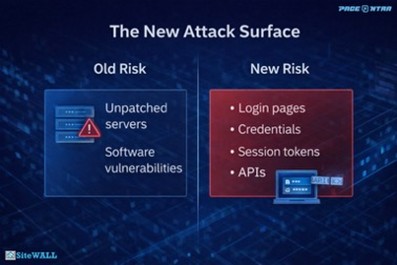
Every new login interface is a potential entry point. Every API key is a potential credential. Every session token is a potential target.
Organizations that recognize this shift and invest in application-layer visibility will be meaningfully better prepared. Those that rely solely on perimeter defences and signature-based detection will remain vulnerable to attacks that look, on the surface, completely legitimate.
Final Thought
Cybersecurity has entered a new phase. The attacker no longer needs to defeat your defences. In many cases, they simply use them correctly.
Security is no longer just about keeping attackers out. It is about detecting malicious behaviour after authentication succeeds — inside sessions that look legitimate, in applications that appear to be functioning normally.
Security teams: audit your post-login visibility this quarter.
The attacker may already be logged in.
Can you see them?
Attackers don’t break in anymore. They log in.