
Verizon DBIR 2025: Web Application and API Breaches — A Growing Cybersecurity Crisis
Executive Summary
- Web Applications and APIs are the top breach vectors in 2025, driven by credential theft, vulnerability exploitation, and third-party risks.
- Credential misuse and vulnerability exploitation combined account for over 40% of all breaches, according to the Verizon DBIR 2025 report.
- Small and Medium Businesses (SMBs) are especially vulnerable, with 88% of their breaches involving ransomware.
- Generative AI and Bots are amplifying cyberattacks, doubling the volume of synthetic phishing emails and automating credential harvesting.
- Urgent Action Needed: Organizations must audit applications, secure APIs, and strengthen employee training to counter rising threats in 2025 and beyond.
Introduction
The 2025 Verizon Data Breach Investigations Report (DBIR) paints a crystal-clear picture: Web Applications and APIs have become the frontline battlegrounds for cybersecurity. While ransomware and social engineering still dominate headlines, it’s the overlooked web apps and exposed APIs that quietly invite devastating breaches. In today’s interconnected ecosystem, these seemingly innocuous endpoints are where most battles are fought — and too often, lost.
Third-party SaaS adoption, reliance on cloud infrastructure, and a surge in credential theft have created the perfect storm. It’s not just about “hacking” anymore; it’s about exploiting the very fabric of how businesses operate.
DBIR 2025 reports a 20% rise in the exploitation of vulnerabilities as an initial access vector — approaching the same levels as stolen credentials. Additionally, 30% of breaches involved third-party partners, a sharp reminder of how vendor APIs and SaaS integrations can silently expose organizations.
The Web Application Threat Landscape
According to DBIR 2025, Web Applications are now among the top three most targeted assets. Breaches involving web apps surged across industries, with credential theft and exploitation of application vulnerabilities leading the charge.
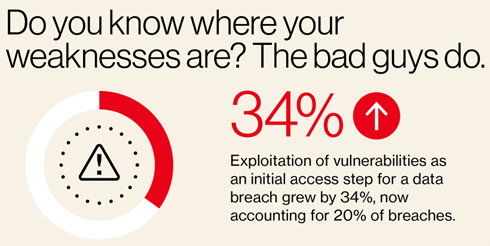
Exploitation of Vulnerabilities Growing 34%
Three major trends fuel this surge:
- Leaked secrets: Web application infrastructure components, including authentication tokens like JSON Web Tokens (JWTs) — compact, secure identity tokens commonly used in login systems — API keys, and passwords, were among the highest categories of leaked credentials discovered in public repositories like GitHub.
- Infostealer malware and BYOD risks: Bring Your Own Device (BYOD) policies have expanded the attack surface, allowing malware to exfiltrate both personal and business credentials — including web app logins and API keys.
- Basic Web Application Attacks: Credential stuffing, brute force attacks, and exploitation of web vulnerabilities continue to plague organizations.
Critically, DBIR 2025 highlights that once vulnerabilities are identified, it still takes organizations a median of 32 days to remediate them — leaving a dangerous window for exploitation.
Actionable Insight: Organizations must harden their web applications faster, as a 32-day window is far too long for today’s threat environment.
Many attacks bypass traditional network defenses by directly targeting poorly secured web interfaces, exploiting human error and missing patches.
Breach Entry Vectors (DBIR 2025 – Estimated)
Here’s how attackers typically gained initial access in breaches (percentages estimated based on DBIR 2025 trends):
Initial Access Vector | Estimated Percentage |
Use of stolen credentials | ~22% |
Exploitation of vulnerabilities | ~20% |
Phishing (social engineering) | ~16% |
Note: “Other” includes issues like misconfigurations, accidental data exposures, and physical breaches
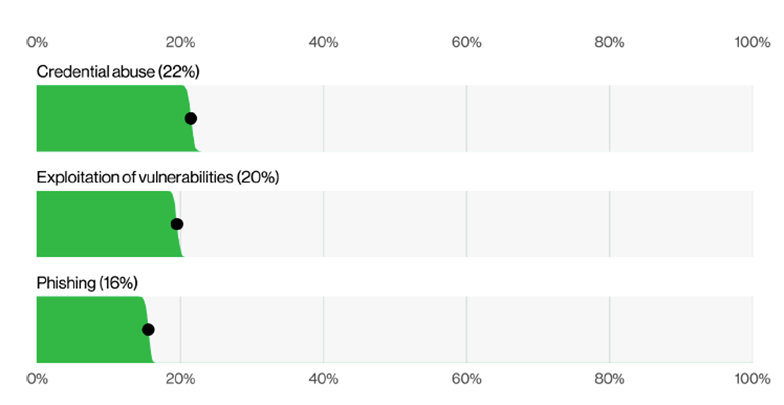
Known Initial Access Vectors
The API Crisis
APIs, the connective tissue behind modern applications, are under siege.
The DBIR reveals that cloud infrastructure breaches increasingly trace back to exposed API keys, particularly for providers like Google Cloud. 43% of cloud-related leaked secrets were API keys, highlighting how critical — and vulnerable — APIs have become.
Compounding the risk:
- Telecom APIs are prime targets for SIM swap frauds, affecting MFA processes.
- Third-party SaaS ecosystems significantly expand API exposure, creating a sprawling attack surface that is difficult to monitor and secure.
DBIR 2025 also signals that APIs will continue to be one of the fastest-growing threat vectors into 2026, requiring urgent strategic prioritization from security leaders.
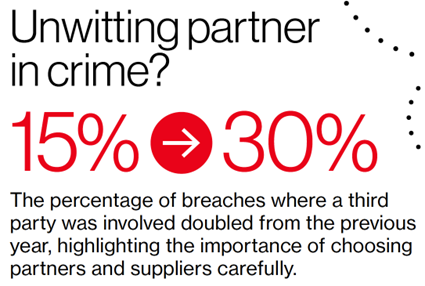
Third-Party Breaches Doubled (30%)
Industry Breakdown: No One Is Safe
Web app and API breaches cut across industries:
- Education and Healthcare sectors are battered by credential theft targeting web portals.
- Finance and Retail sectors report heavy losses through basic web application attacks.
- Manufacturing faces exposure through misconfigured APIs tied to supply chain management.
- Public Sector institutions, highlighted in a dedicated section of this year’s DBIR, are grappling with an alarming surge in web application breaches.
Small and Medium Businesses (SMBs) are disproportionately impacted. Leaner IT security teams, outdated systems, and under-resourced web defenses leave them highly vulnerable —
with 88% of SMB breaches involving ransomware, according to DBIR 2025.
Adding to the urgency, 17% of breaches were espionage-motivated, often targeting government, healthcare, and critical infrastructure sectors — where web application vulnerabilities are a favorite initial entry point for sophisticated state-affiliated threat actors.
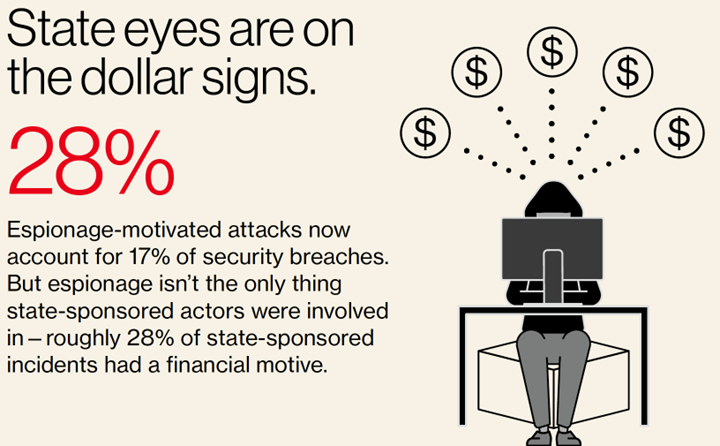
17% of breaches were espionage-motivated,
Lessons Learned: Securing the Frontlines
The DBIR 2025 implicitly points the way forward:
- Harden Web Apps Faster: Implement Web Application Firewalls (WAFs) — security solutions that protect web applications from threats like SQL injection, cross-site scripting, and DDoS attacks. Regularly conduct penetration tests and enforce strong session management.
- Audit Secrets and Credentials: Start with credential and secret audits — scan code repositories for leaked API keys, JWTs, and credentials. Focus here because 43% of cloud-related breaches involved API key leaks.
- Secure APIs by Design: Enforce API key expiration, rate limiting, token-based authentication, and maintain a full inventory of third-party API integrations.
- Strengthen Authentication: Apply MFA across employees, APIs, SaaS providers, and service accounts.
- Enhance Third-Party Risk Management: Thoroughly vet SaaS providers’ security, especially their API and web app hygiene.
- Train Employees: Educate staff to recognize phishing attempts, report suspicious activity, and verify system configurations — because human error remains a significant root cause across breach patterns.
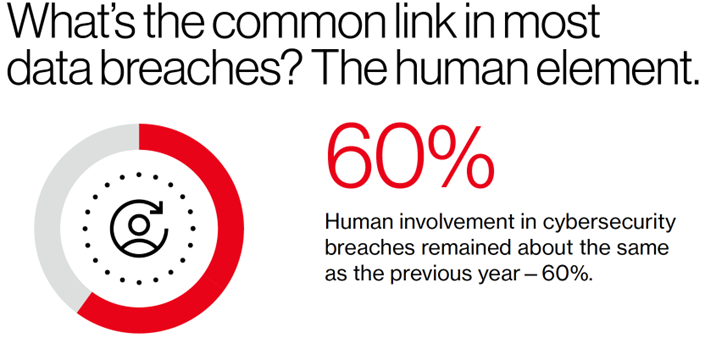
Broader Cybersecurity Context
While this blog focuses on Web Applications and APIs, it’s important to recognize the broader threat landscape.
The 2025 DBIR reveals that ransomware was present in 44% of breaches, marking a 37% increase from the prior year.
Emerging threats like Generative AI (GenAI) misuse are also beginning to impact the attack surface, particularly in phishing and influence operations.
Notably, DBIR 2025 highlights a doubling of synthetically generated text in malicious emails — attackers increasingly use GenAI tools to craft convincing phishing lures that trick users into surrendering web app credentials and API keys.
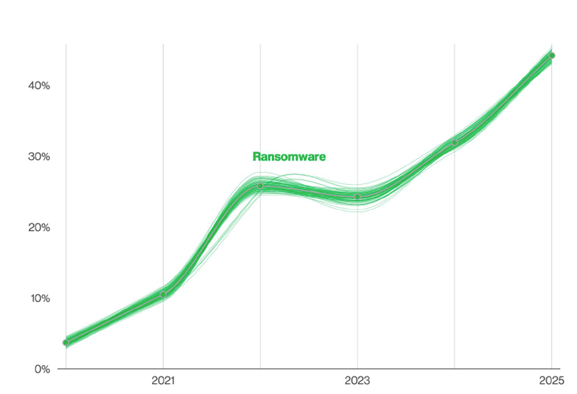
Ransomware Action Over Time
Bots, powered by AI, are also increasingly assisting cyberattacks — automating the generation of synthetic phishing emails, credential harvesting, and even probing web applications and APIs for vulnerabilities.
This automation trend not only speeds up attack timelines but also increases the sophistication of campaigns targeting exposed web surfaces.
Despite these growing risks, Web Applications and APIs remain the most critical and exposed attack surfaces today.
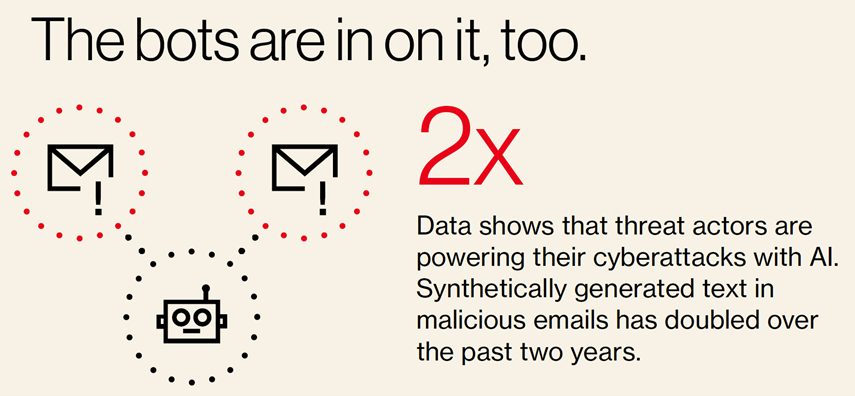
The Bots Are in on It – emphasizes automated attacks with bots and AI
Real-World Lessons: The Snowflake and MOVEit Breaches
Recent examples highlight the severity of Web App and API risks:
- Snowflake Incident: In 2024, attackers leveraged stolen credentials and gaps in multi-factor authentication enforcement to access customer data at scale through a popular SaaS platform.
- MOVEit Transfer Exploits: Attackers mass-exploited a vulnerability in the MOVEit file transfer platform’s web interface, leading to wide-scale data breaches across multiple sectors.
Both incidents underscore how even trusted platforms and services can become significant breach vectors when APIs or web applications are not properly secured.
Conclusion
Web applications and APIs are no longer just back-end systems; they are the main attack surfaces in today’s cybersecurity landscape. In 2025, attackers aren’t knocking politely — they’re walking right in through poorly defended web apps and APIs.
Organizations must now treat web app and API security as a top-line strategic priority. As DBIR 2025 shows, these endpoints are the true frontlines — and preparation is the only way to win.
The API threat is only expected to grow stronger into 2026. Now is the time to act.
Call to Action
Start by auditing your applications and APIs today — focus especially on scanning for leaked API keys and credentials in repositories like GitHub, as 43% of cloud-related leaks involve API keys.
Prioritize resilience, enforce modern security measures, and ensure your organization is not a headline in the next DBIR.
Looking for a solution to protect your web applications and APIs Explore SiteWALL — a next-generation Web Application and API Protection (WAAP) platform. Register for a free demo today and see how SiteWALL can help you secure your digital frontlines.